

Tungsten Carbide Cold Rolls
Relink.Tools supplies carbide roll rings in the RO, RT, CA, FO and PR types, roller holders, complete cold rolling cassettes and spares, for finished wire from about 3 to 16 mm. Tell us your mill model, the rod size going in and the wire size coming out, and we match the full ring set.
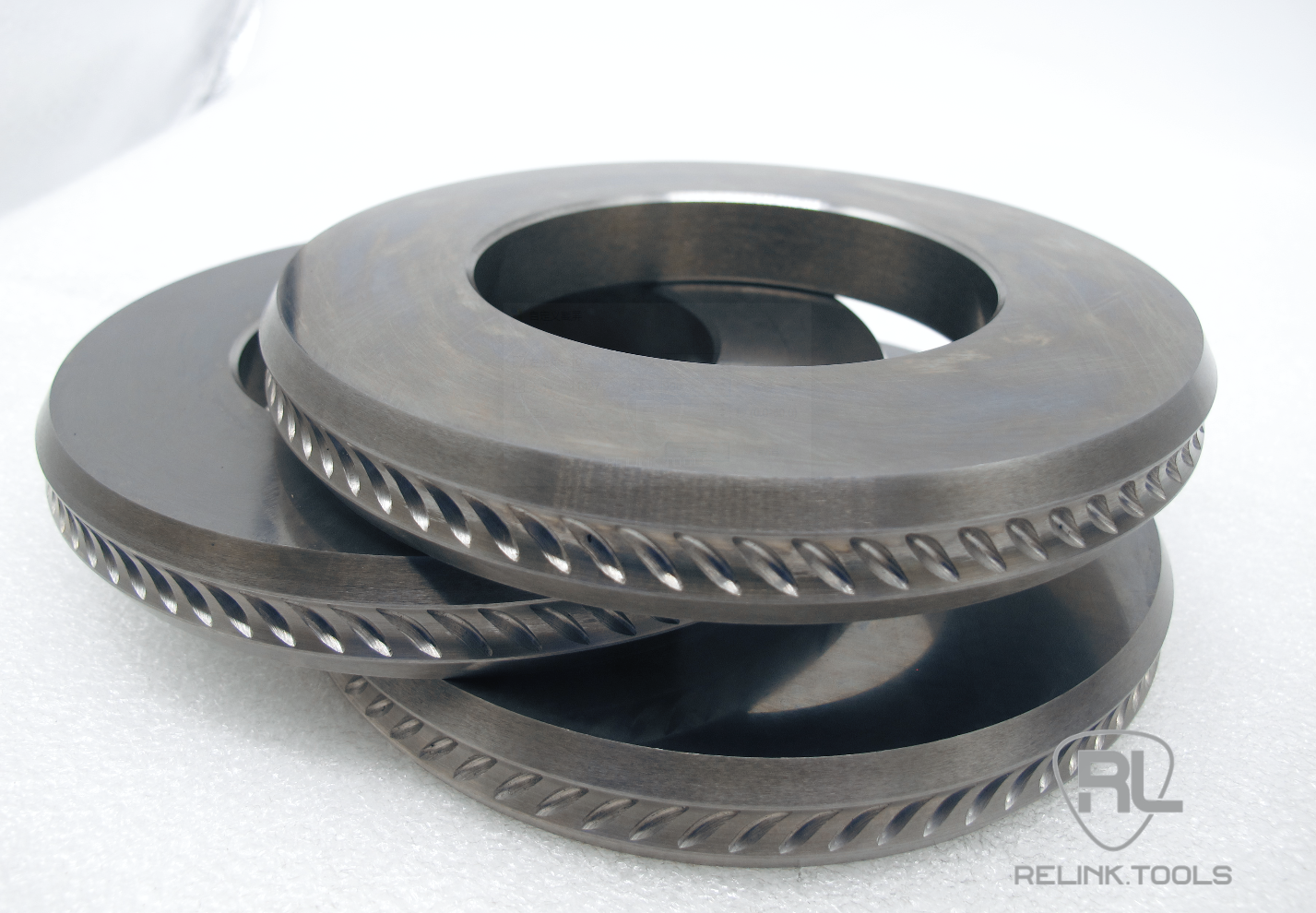
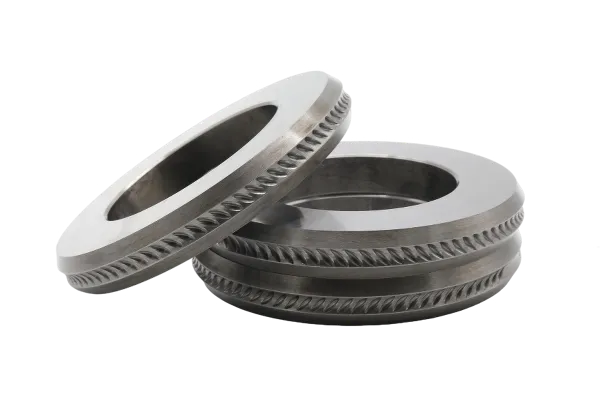
Tungsten carbide cold rolls — also called carbide roll rings — are the sintered carbide rings that do the work inside a cold rolling cassette: mounted three to a set around the wire, they reduce wire rod in diameter at room temperature and, in the final set, roll the ribs onto it. A plain set produces plain-round wire; a ribbed set produces cold-rolled ribbed wire for reinforcement. Each ring is a wear part, and a worn or wrongly chosen set shows up at once as off-size wire, poor ribs or short ring life.
Overview
Overview
Where roll rings sit in the line
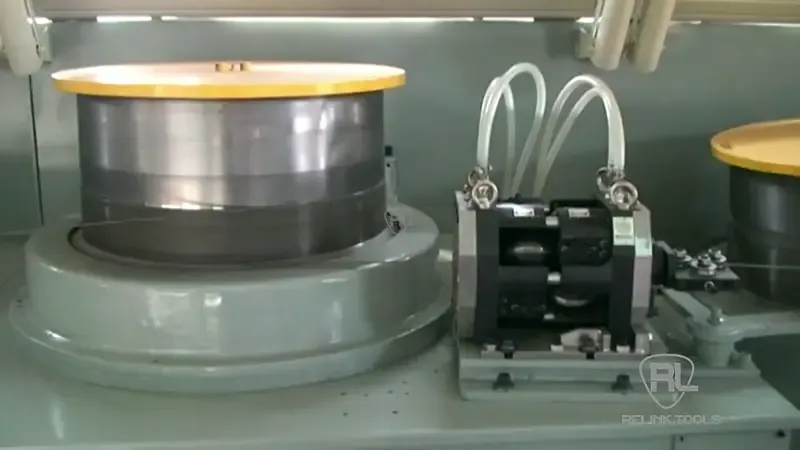
Wire rod comes off the pay-off, is descaled, and runs through one or two cassettes. Most lines today use two: the first cassette reduces the rod, the second finishes it — either to size for plain wire, or with the rib profile for ribbed wire. The wire then goes to the take-up, or straight on to a mesh welder. The cassettes page explains the two-cassette layout and which ring type goes in which position.
What the wire is for
- Plain-round wire goes to welded mesh of every kind — fencing, industrial and construction mesh — and to general wire products. Mesh welders also need copper electrodes and electrode holders, which we supply.
- Cold-rolled ribbed wire goes to reinforcing mesh, stirrups, cages and lattice girders for concrete construction. In China it is made to GB 13788-2024, in force since September 2024: CRB550 and CRB650 take three-sided ribs, rolled with a three-ring set, while the high-ductility grade CRB600H keeps two-sided ribs and a two-ring set.
Roll rings or drawing dies?
For plain wire there are two ways to reduce the rod: cold-roll it between plain roll rings, or pull it through wire drawing dies. Our recommendation: for large tonnages of one wire size, roll rings are usually the cheaper route; for smaller lots and frequent size changes, drawing dies cost less. As a rough guide, the crossover is around 500 tonnes a month per wire size. Ribbed wire is rolled — there is no drawing-die route to ribs. Relink.Tools supplies both, so tell us your sizes and tonnage and we will say which one we would run.
Descaling Rolls
Descaling Rolls
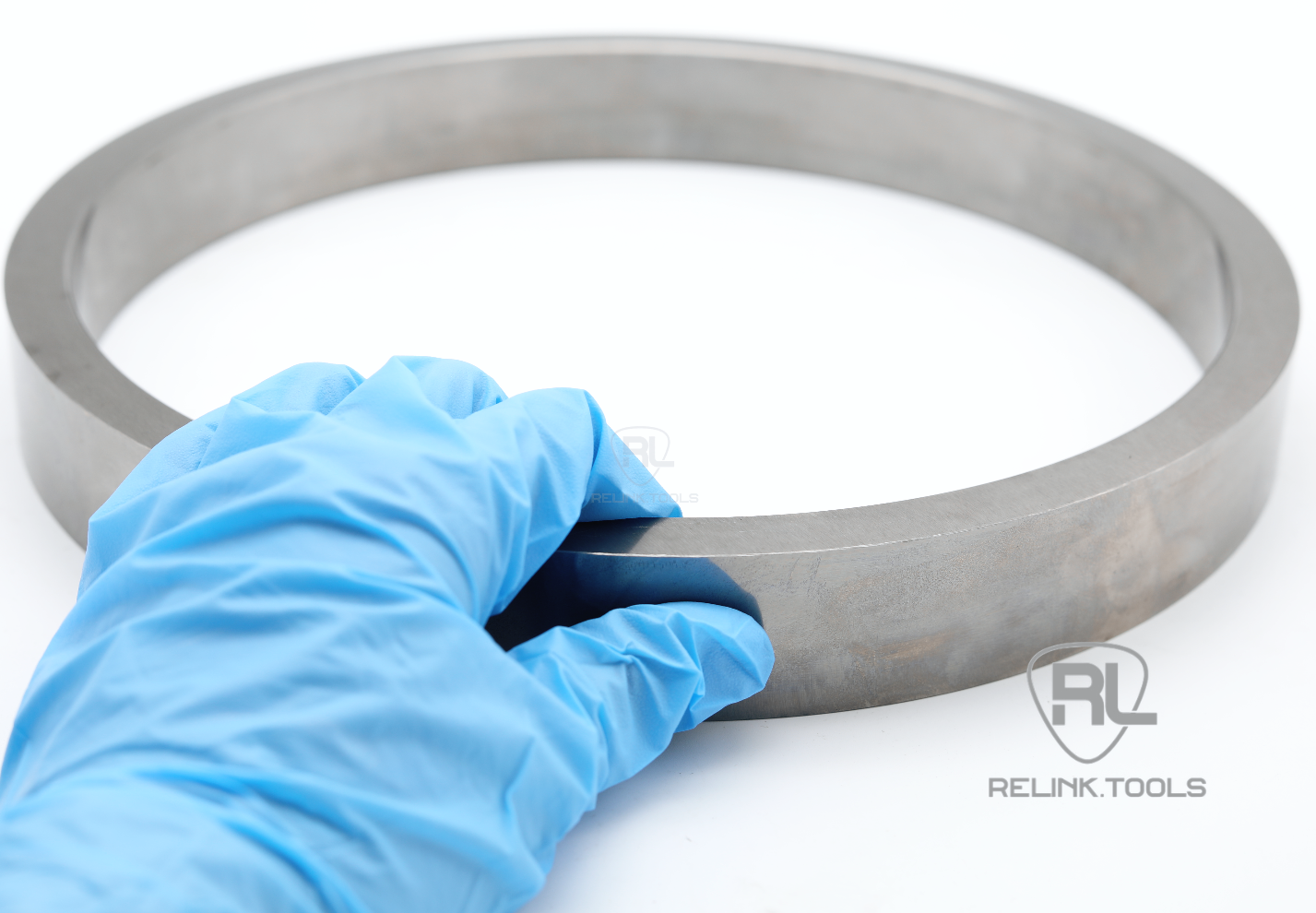
Carbide descaling rolls remove the mill scale from wire rod by reverse bending it before rolling or drawing. We supply descaling rolls to drawing and to the dimensions of your descaler; the usual buyers are straightening-machine and drawing-machine builders, as well as wire plants replacing worn rolls. Use the technical quote page and pick "Other".
Specifications
Ring types
| Type | Function | Position |
|---|---|---|
| RO | Oval reducing | First set of a reduction cassette |
| RT | Round reducing | Second set of a reduction cassette |
| CA | Sizing to final diameter | Finishing set for plain-round wire |
| FO | Forming the section before ribbing | First set of a ribbed finishing cassette |
| PR | Profiling — rolls the ribs | Last set for ribbed wire |
A two-cassette line runs RO + RT in the first cassette, then RO + CA for plain wire or FO + PR for ribbed wire. Reducing and sizing sets are three rings; the ribbing set is three rings for three-sided ribs and two for two-sided ribs. Full detail, including what two passes change, is on the cold rolling cassettes page.
Carbide grades
| Grade | Co % | WC % | Density g/cm³ | Hardness HRA | TRS MPa |
|---|---|---|---|---|---|
| YG15 | 14.9 | 85.1 | 13.95–14.15 | ≥ 86.5 | ≥ 2,220 |
| YG16C | 16 | 84 | 13.80–14.00 | ≥ 84.0 | ≥ 2,480 |
| YG20 | 20 | 80 | 13.45–13.65 | ≥ 83.5 | ≥ 2,480 |
All three grades are used for both reducing and ribbing sets; in practice the grade is not assigned by ring position. Our recommendation: lower cobalt (YG15) where wear sets ring life, higher cobalt (YG20) where rings crack or chip before they wear — typically the heavier-loaded sets on a two-cassette line. Tell us which set is failing and how, and we will suggest the grade.
The mill matters too. A rigid, precisely set mill spreads the load evenly and can run a harder grade; a less rigid mill, with more shock and misalignment — common on older three-roll cassettes — needs a tougher one.
Sizes
- Finished wire: typically 3–16 mm (down to 2.5 mm on request).
- Ring thickness: standard rings for most sizes; 25 mm-thick rings for finished sizes above 14 mm.
- Two-sided ribs use paired rings, two to a set; three-sided ribs use a three-ring set with different ring dimensions and angles. Under GB 13788-2024 that means a three-ring set for CRB550 and CRB650 and a two-ring set for CRB600H; tell us the grade you make and we will match the set.
Ring dimensions follow the mill model. You do not need to measure anything: give us the model, or the rod and finished diameters, and we match the full ring sequence.
Compatible machines
Rolling mills we supply ring sets for
| Mill | Models |
|---|---|
| Promills | 933F · 922FX · 1121 · 11221 · 1131 · 1131DH · 11331 · 1221 · 12221 · 1231 · 12331 · 1521 · 15221 · 1531FC · 1531DH · 15331 · 1541 |
| Demgroup | CLF-075 · CLF-090 · CLF-120 · CLF-125 · CLF-150 · CLF-180 · CLF-240 |
| Eurolls | CL20D20 · CL20R20 · CL20C133 · CL25CB20 · CL25CB22 · CL25CB33 · CL25C133 · CL30CA33 · CL30D20 · CL30C133 |
| Eurodraw (GCR) | CLR 760/1 · CLR 760/2 · CLR 760/3 · CLR 760/560/1 · CLR 900/3 |
| PromoStar | By cassette dimensions |
Mill not listed, or a Chinese-built cassette? Send the cassette drawing, a worn ring with its markings, or the ring dimensions, and we will match it.
Compare
Ribbed set or plain set — and one pass or two
- Plain rings (RO · RT · CA) reduce and size. They are what a plain-wire line runs end to end.
- Ribbed finishing rings (FO · PR) form the section and roll the ribs. A ribbed line runs plain reducing rings first, then the FO + PR set.
- Two cassettes instead of more cuts equipment and running cost, but each ring set carries more load and wears faster. That is where grade and ring geometry matter most — see what changes on a two-pass line.
FAQ
FAQ
What are tungsten carbide roll rings used for?
They cold-roll wire rod into plain-round or ribbed wire inside a cold rolling cassette, three rings to a set. Plain wire goes mainly to welded mesh; ribbed wire goes to reinforcing mesh and other concrete reinforcement.
Which grade should I use — YG15, YG16C or YG20?
All three are used for both reducing and ribbing sets. Choose lower cobalt where the rings wear out, and higher cobalt where they crack or chip first. Tell us which set is failing and how, and we will recommend one.
How do I find the right ring for my mill?
Give us the mill model, or the rod diameter going in and the wire diameter coming out. Ring dimensions follow the model, so you do not need to measure. If the mill is not one we list, send the cassette drawing or a worn ring.
Can I roll plain wire with roll rings instead of drawing it?
Yes. For large tonnages of one size, rolling is usually cheaper; for smaller lots, drawing dies are. As a rough guide the crossover is around 500 tonnes a month per wire size. Ribbed wire can only be rolled.
Why did my carbide roll ring crack?
Look at three things before blaming the ring. The mill: are the three rings of the set centred, adjusted together and locked in position? The rolling practice: is the reduction per set higher than the rings were chosen for, are the rings reground in time, and are the shafts within tolerance, so the rings are not forced on? The ring itself: porosity, low density or a rough ground surface can start a crack. Tell us which ring in the set failed first and how it broke, and we will go through it with you.
When should roll rings be reground?
As soon as fine cracks appear on the working surface — and grind them out completely. A crack left in place grows faster on the next run and can end with the ring breaking.
How can I tell good tungsten carbide from bad?
By what you can measure. Density, hardness, porosity and transverse rupture strength show whether the carbide is fully dense and sound; low density and porosity are where cracks start. How it is made counts too: denser processing gives higher and more consistent strength, and how the tungsten powder is prepared decides the microstructure. The grade table above gives the figures for each grade we supply.
Do you supply roller holders and complete cassettes?
Yes — ring sets, roller holders, cooling pins, spares and complete cold rolling cassettes. See the cold rolling cassettes page.
Do you supply descaling rolls?
Yes. Carbide descaling rolls are made to your drawing or to the dimensions of your descaler. Ask for them under "Other" on the quote form.
What do you need from me to quote?
Mill model (or rod and finished diameters), ring type or set, quantity, and the mill speed if you know it. For ribbed wire, add the grade you make, for example CRB550 or CRB600H. Use the form below, or the technical quote page.
Request a Quote
Get In Touch QuicklySend us your machine model or drawing, the wire or material, and the quantity. We will prepare a quotation.