

Wire for welded mesh: roll it or draw it, and what each line needs
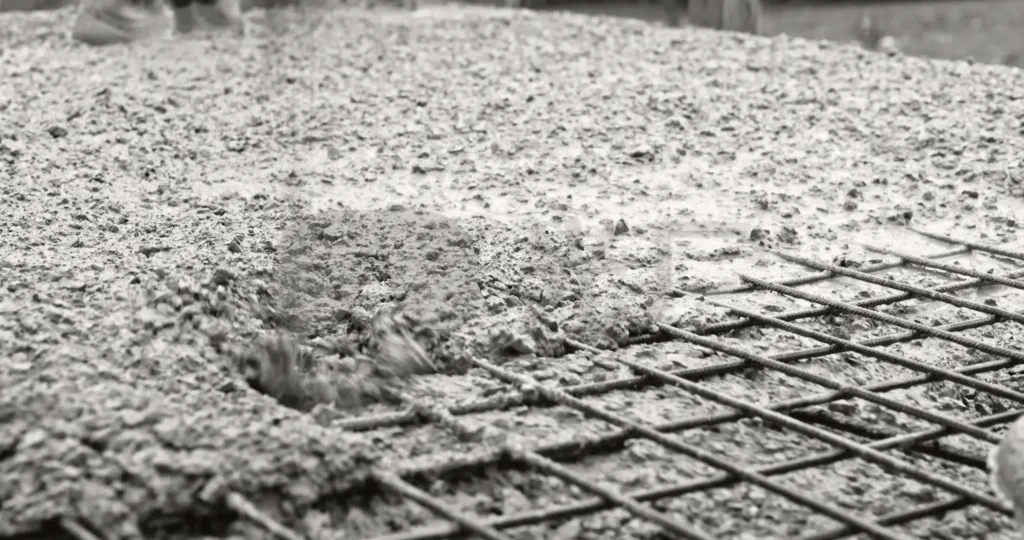
From wire rod to welded mesh
A mesh plant takes hot-rolled wire rod, brings it down to the finished wire size, and welds the wire into panels. The size reduction is done either by cold rolling the rod through carbide roll rings or by drawing it through dies; a ribbed-wire line also rolls the ribs on in the last stand. The welder then needs its own wear parts, the copper electrodes and contacts.
Relink.Tools supplies the roll rings, roller holders, complete cassettes, drawing dies and welder copper parts for both kinds of line, and matches them to your mill or drawing machine model.
What you get
- Ring sets matched to the mill model, the rod size and the finished size — you do not need to specify ring types or grades.
- Plain or ribbed sets, two-piece or three-piece ribbing sets to the rebar grade you make.
- Drawing dies for the sizes you run in small volume.
- Copper electrodes and contacts for the mesh welder.
- Wire rod
- Descaling
- Size reduction
- Ribbing (ribbed wire only)
- Mesh welding
- Welded mesh
What are you making?
Plain wire for welded mesh
Plain-round wire for fencing mesh, industrial mesh and general-purpose panels. The rod is reduced to size and goes straight to the welder. Most plants cold roll it in two cassettes — three reducing sets and one sizing set; smaller volumes, or a size you only run occasionally, are often better drawn through dies. The choice is covered below.
Ribbed wire for reinforcement mesh
Cold-rolled ribbed wire for reinforcing mesh, cages and stirrups. The first cassette is the same as for plain wire; the second cassette forms the wire to an oval section and rolls the ribs. Ribbed wire can only be rolled, not drawn, and the ribbing set follows the rebar grade: three-sided ribs take a three-piece set, two-sided ribs a two-piece set.
What each stage needs
1. Descaling
The rod's oxide scale is cracked off by bending it over rolls before it enters the cassette or the drawing machine. Carbide descaling rolls are a long-life part here.
Supplied as: carbide descaling rolls · Made to: descaler model and rod diameter · Ask for: rod diameter, descaler model. → Descaling rolls
2. Cold rolling — plain wire
Two cassettes in line, each carrying two sets of three carbide rings. The first cassette reduces the rod; the second finishes it to size. Ring types follow the position in the line — reducing sets first, a sizing set last — and the full set is chosen from the mill model and the rod and finished diameters.
Supplied as: roll ring sets, roller holders, complete cassettes and spares · Made to: mill model · Ask for: mill model, rod diameter, finished diameter, number of cassettes. → Carbide roll rings · Cold rolling cassettes
3. Cold rolling — ribbed wire
The first cassette is unchanged. In the second, a forming set presses the wire to an oval and a ribbing set rolls the ribs. The ribbing set is matched to the rebar grade: for three-sided ribs a three-piece set, for two-sided ribs a two-piece set.
Supplied as: forming and ribbing ring sets, roller holders · Made to: mill model and rebar grade · Ask for: mill model, finished diameter, rebar grade (for example CRB550, CRB650 or CRB600H). → Carbide roll rings
4. Drawing instead of rolling
For plain wire in smaller volumes, or for a size you run only now and then, drawing through dies avoids setting up a cassette. Nano-coated dies for the sizes you run most, carbide dies for short runs. Drawing powder is matched to the wire and die.
Supplied as: drawing dies, drawing powder · Made to: drawing machine model or pass schedule · Ask for: rod and finished diameters, number of passes, machine model. → Wire drawing dies
5. Mesh welding
The welder's electrodes and current-carrying contacts are copper-alloy wear parts replaced on a schedule.
Supplied as: electrodes, electrode holders and contact parts · Made to: welder model or drawing · Ask for: welder model, part drawing or sample. → Copper spare parts for mesh welders
What we supply for this line
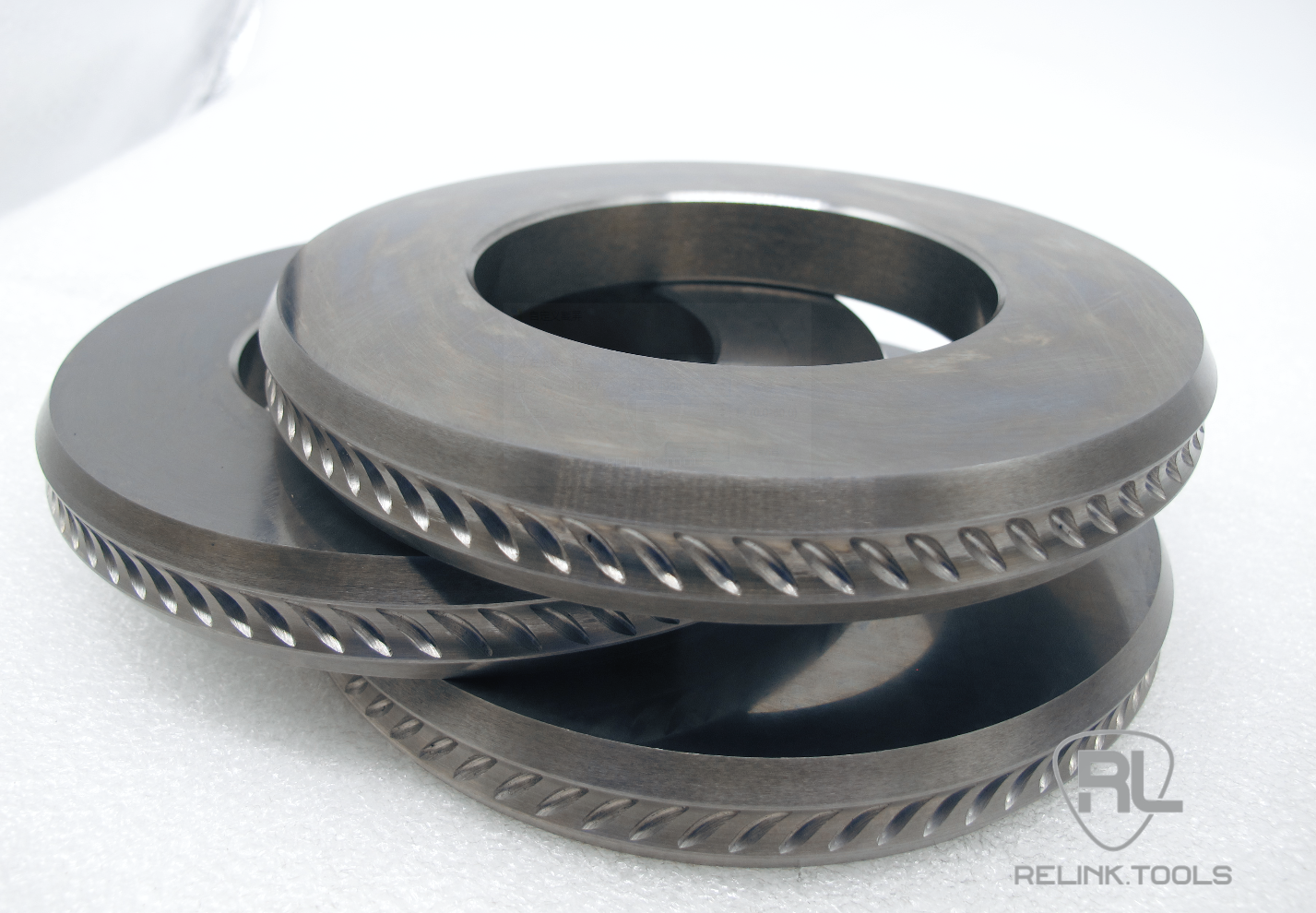 Carbide roll ringsReducing, sizing, forming and ribbing sets to the mill model.
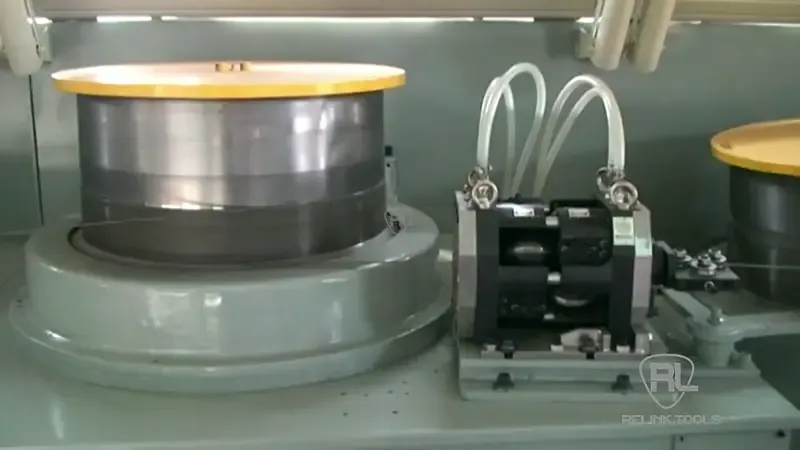 Cold rolling cassettesComplete cassettes, roller holders and spares.
- Descaling rollsLong-life carbide rolls for mechanical descalers.
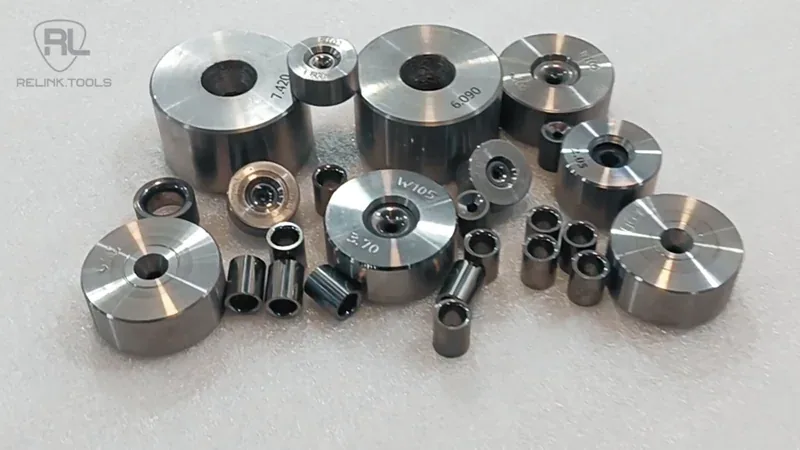 Wire drawing diesFor the sizes you draw rather than roll.
 Wire drawing powderDry drawing lubricant.
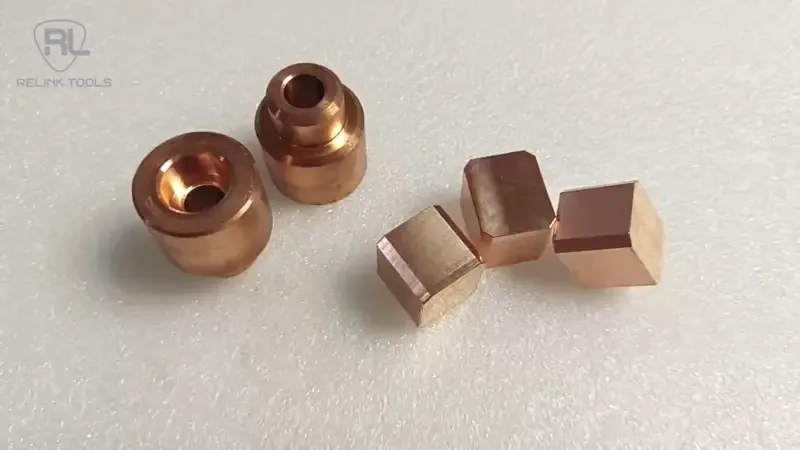 Copper spare partsElectrodes and contacts for mesh welders.
What we need to quote
Three things start a quote: what you need, the mill or machine model, and an email or WhatsApp number. The details below make it faster.
- Roll ring sets: mill model (or rod and finished diameters), plain or ribbed, number of cassettes; for ribbed wire the rebar grade; whether you need roller holders or complete cassettes as well.
- Drawing dies: rod and finished diameters, number of passes or machine model, dry or wet.
- Welder parts: welder model, drawing or a photo of the worn part.
- Descaling rolls: descaler model, rod diameter.
Request a quote — or send us a message if you would rather describe the line in your own words first.
Our suggestions
Roll or draw? Decide by volume per size. Cold rolling pays off when one size runs in volume; drawing suits smaller volumes and occasional sizes. As a rough guide we use about 500 tonnes a month of a single size as the point where a cassette earns its place — but the real answer depends on the diameter and your line, so tell us both.
Running two passes instead of three? Say so. Many plants have cut a cassette to save cost. Each remaining ring set then takes a bigger reduction, which changes the ring type and the grade we suggest. Tell us the number of cassettes and the reduction per pass, and we match the set to the heavier duty rather than to the old layout.
For ribbed wire, lead with the rebar grade. The grade fixes the rib pattern, and the rib pattern fixes whether the ribbing set is two-piece or three-piece. Mill model plus grade is enough for us to configure the whole second cassette.
Questions mesh plants ask
Should I cold roll or draw the wire for my mesh?
Roll the sizes you run in volume, draw the sizes you run occasionally. Ribbed wire has to be rolled. If you are setting up a new line, tell us the sizes and the monthly tonnage per size and we will suggest where a cassette makes sense and where dies do.
Which ring set do I need for CRB550, CRB650 or CRB600H?
Three-sided rib grades such as CRB550 and CRB650 take a three-piece ribbing set; the two-sided CRB600H takes a two-piece set. Give us the grade and the mill model and we configure the forming and ribbing sets together.
Do I have to specify the carbide grade?
No. Tell us the mill, the sizes and how many passes you run, and we choose the grade. All the grades we use can reduce and rib; we pick the harder or the tougher one depending on the load on each set.
Do you supply the complete cassette, or only the rings?
Both. Ring sets alone, roller holders, spares, or complete cassettes — see the cassettes page.
What do you need from me to quote a ring set?
Mill model or the rod and finished diameters, plain or ribbed, the number of cassettes and, for ribbed wire, the rebar grade. A photo of the old ring set helps if the mill is not a common model.
Request a Quote
Get In Touch QuicklySend us your machine model or drawing, the wire or material, and the quantity. We will prepare a quotation.