

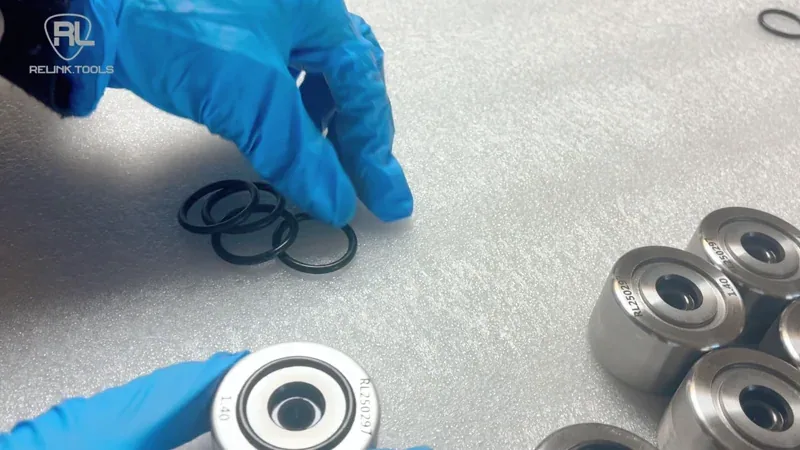
Nano Coated Wire Drawing Dies
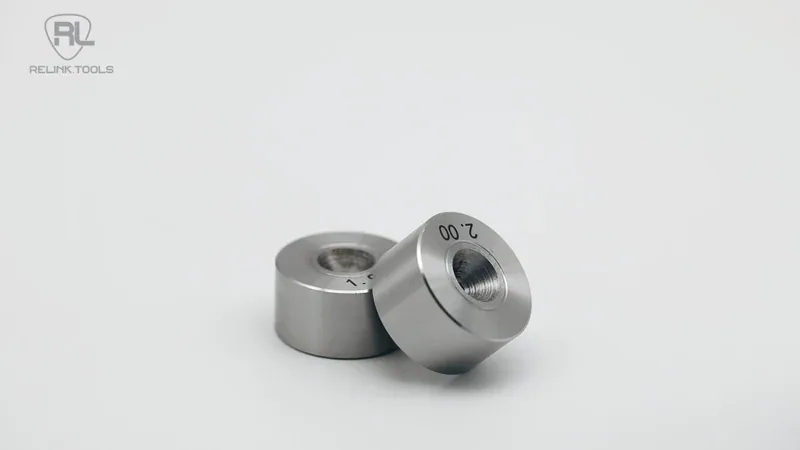
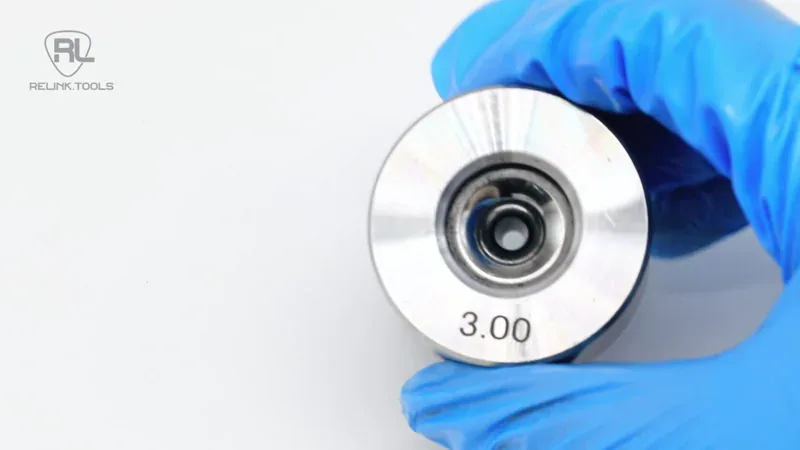
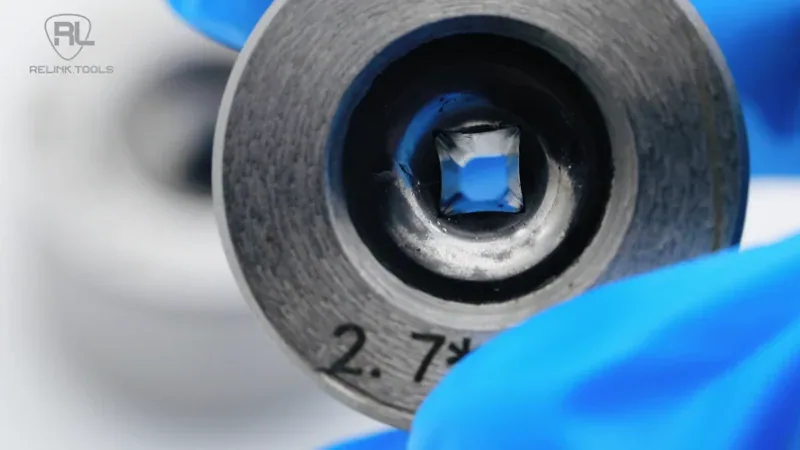
Relink.Tools supplies nano-coated dies for steel and non-ferrous wire, from under 1 mm up to large sizes, mounted in steel casings to fit your machine. It is the die we recommend first for most wire drawing lines.
| Coating | Nano-crystalline diamond, applied to the bore by CVD |
|---|---|
| Body | Tungsten carbide |
| Bore size | From under 1 mm up to large sizes; confirmed per enquiry |
| Casing | Steel casing, sized to your die holder; send the machine model or casing dimensions |
Category: Wire Drawing Dies
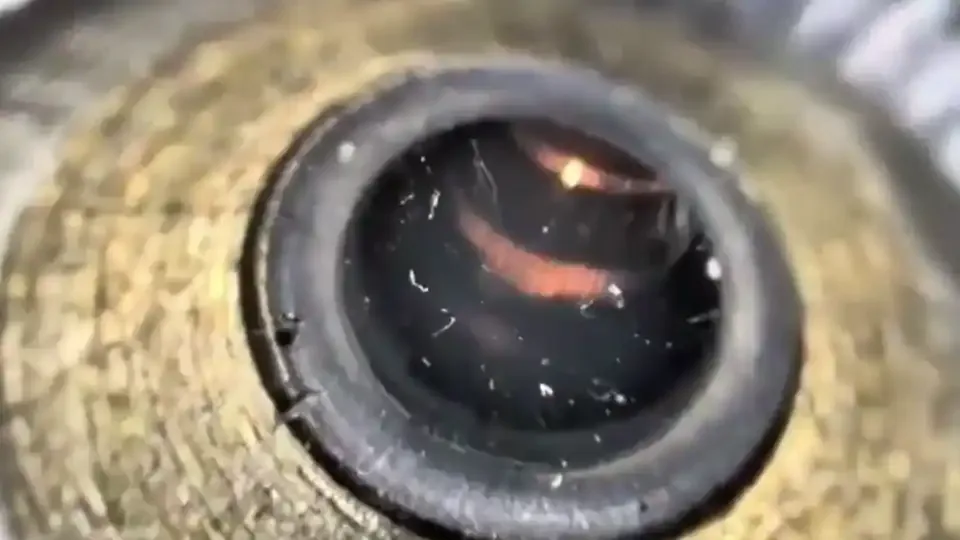
A nano-coated wire drawing die is a tungsten carbide die with a thin layer of nano-crystalline diamond grown onto the bore by chemical vapour deposition (CVD). The carbide body carries the drawing load and keeps the die tough; the diamond layer is what the wire actually rubs against, so the bore wears very slowly and stays close to size for much longer than plain carbide. The diamond surface also has low friction, which means less heat in the die, easier lubrication and a smoother wire.
Selection
Overview
Why a nano-coated die costs less per tonne
A nano-coated die costs more than a carbide die to buy, and the question is whether it pays. The way to answer it is die cost per metre of wire:
Die cost per metre = (die price + changeover and downtime cost per die) ÷ output length per die
A nano-coated die typically draws 10 times or more the length of wire that a carbide die does before it goes out of tolerance, depending on the wire and the pass. The price difference is nowhere near 10 times. So the cost per metre comes down, and so do the die changes, the downtime and the restarts. On one high-carbon line drawing 6.5 mm rod to 5.85 mm, the customer went from a start-up speed of 2 m/s to 5 m/s after switching to nano-coated dies.
Our recommendation: track output length per die on your own line for one or two sizes before you switch the whole machine. The number will tell you more than any catalogue figure.
Which passes should go first?
You do not have to change every die on the machine at once. Our recommendation is to start with the last three or four passes that are above about 2 mm. They run fast, and a worn die there shows up directly in the size and surface of the wire. If your line finishes below about 2 mm, put those final passes on PCD instead: in the small sizes the coating's advantage narrows, and PCD is usually the more economical choice. Once your first passes are on nano-coated dies and you have your own life figures, work backwards through the line.
Does a nano-coated die depend on tungsten prices?
Less than a carbide die, but not zero. The body is still tungsten carbide, so part of the price moves with the tungsten market. The difference is in how many dies a line uses: with 10 times or more the life per die, the tungsten bought per tonne of wire drawn is a small fraction of what a carbide-die line consumes, so a swing in tungsten price has far less effect on your die cost per metre.
Specifications
Nano-coated die specifications
| Coating | Nano-crystalline diamond, applied to the bore by CVD |
| Body | Tungsten carbide |
| Bore size | From under 1 mm up to large sizes; confirmed per enquiry |
| Bore geometry | Entrance, approach angle, bearing length and back relief made to your specification, or to suit the wire and reduction if you leave it to us |
| Casing | Steel casing, sized to your die holder; send the machine model or casing dimensions |
| Shaped bores | Available — square, hexagonal, flat and other profiles to your drawing; see shaped dies |
| Wet or dry drawing | Both. Two things to watch: keep the lubricant — powder or oil — free of hard particles that can score the coating, and on high-speed dry lines keep the die box cooled so the die is not thermally shocked |
| Re-sizing | Not possible. The coating cannot be recut; a worn die is replaced. For dies you intend to re-size, see PCD dies |
All sizes and geometries are confirmed on the order. For a full material comparison, see wire drawing die materials compared.
Which wire
Which wire is a nano-coated die for?
Most of them. Nano-coated dies are used on steel and non-ferrous wire alike, which is why we recommend them first rather than splitting the choice by wire grade.
| Your wire | Our recommendation |
|---|---|
| Low-carbon steel — nail wire, mesh wire, welding wire | Nano-coated, all passes |
| High-carbon, spring and rope wire | Nano-coated. The higher the wire speed and the harder the wire, the bigger the gain over carbide |
| Stainless steel | Nano-coated |
| Copper and aluminium conductors | Nano-coated above about 2 mm; PCD below |
| Stranded and bunched conductors (compacting dies) | Nano-coated, to the conductor profile |
| Ultra-fine non-ferrous and precious-metal wire | Natural diamond or SSCD — see the comparison |
Two cases point away from nano-coated: bores below about 2 mm, where PCD is usually the more economical choice, and plants that recut worn dies to the next size, which a coating does not allow.
Dry drawing? The lubricant matters as much as the die — see wire drawing powder.
Compare
Nano-coated, PCD or carbide — the short version
- Nano-coated. A carbide body does the structural work; the diamond layer does the wearing. Long life on steel and non-ferrous wire, and large sizes are available. The coating cannot be repaired.
- PCD. Diamond through the full working depth, so it can be recut to a larger size. Usually the economical choice below about 2 mm.
- Tungsten carbide. The lowest purchase price and the shortest life. Still the right choice for short runs and trials, and its price follows the tungsten market.
See the full comparison, including SSCD and natural diamond.
FAQ
FAQ
What is a nano-coated wire drawing die?
A tungsten carbide drawing die with a nano-crystalline diamond layer grown onto the bore by CVD. The carbide gives the die its strength; the diamond surface gives it its wear life and low friction.
How is it different from a PCD die?
A PCD die has diamond all the way through its working depth, so it can be recut to a larger size when worn. A nano-coated die has diamond only as a thin surface layer, so it cannot be recut, but it is available in large sizes. Below about 2 mm PCD is normally the better buy; above that, nano-coated.
How long does a nano-coated die last?
Typically 10 times or more the life of a tungsten carbide die, depending on the wire and the pass. Harder wire and higher speeds tend to widen the gap. We can share field figures for wire like yours on request.
Which passes should I switch to nano-coated first?
The last three or four passes above about 2 mm. They run fast, and a worn die there costs you tolerance straight away. If your line finishes below about 2 mm, those final passes are better on PCD. Work backwards through the line once you have your own life figures.
Does a nano-coated die still depend on tungsten prices?
Partly: the body is tungsten carbide. But a line on nano-coated dies uses far fewer dies per tonne of wire, so tungsten price swings have much less effect on your die cost per metre than they do with plain carbide.
Can a worn nano-coated die be repaired or re-coated?
No. Once the coating is worn through, the die is replaced. If you need dies that can be recut to the next size, choose PCD.
How does a nano-coated die wear out — what should I watch for?
Differently from carbide. A carbide die wears gradually, so the wire diameter creeps up until it goes out of tolerance. A nano-coated die holds its size for most of its life; at the end, the coating starts to break away in places, and the wire diameter jumps suddenly or the surface shows fresh scoring. On a line running nano-coated dies, treat a sudden jump in diameter or new scratch marks as the signal to change the die.
What do you need from me to quote?
The wire grade, the inlet and outlet sizes, the drawing speed if you know it, and the quantity. Casing dimensions or the machine model help the die fit first time. For a full die set, also give us the drawing machine model. Use the form below, or the technical quote page.
Request a Quote
Get In Touch QuicklySend us your machine model or drawing, the wire or material, and the quantity. We will prepare a quotation.