

Conductor to cable: the tooling that decides insulation cost and test results
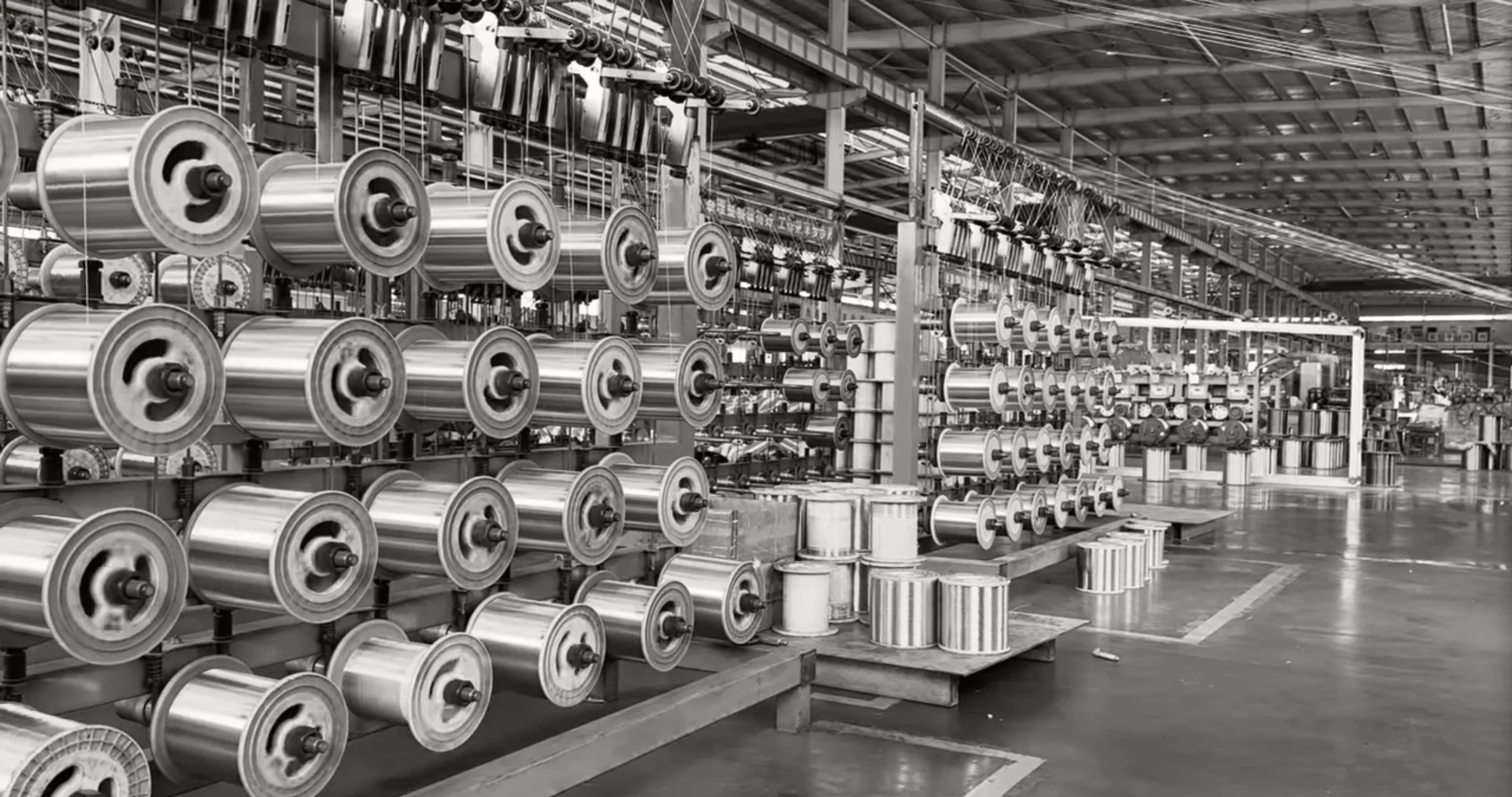
From rod to insulated conductor
A cable plant draws copper or aluminium rod down to single wires, bunches or strands them into a conductor — often compacting the strand as it goes — and extrudes the insulation over it. Three tooling stages, and the first two decide how the third behaves: the roundness and surface of the conductor set how much insulation compound the extruder has to put on, and whether the cable passes its electrical tests.
Relink.Tools supplies the drawing dies, compacting dies and extrusion tips and dies for this line, matched to your drawing machine, stranding line and crosshead model.
What you get
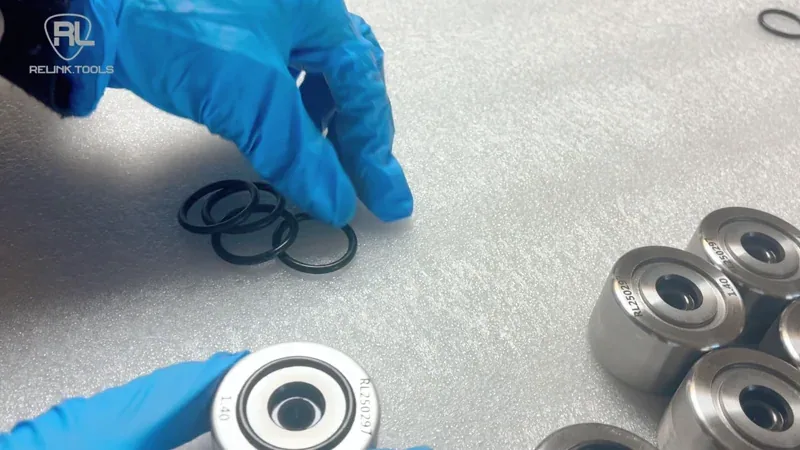
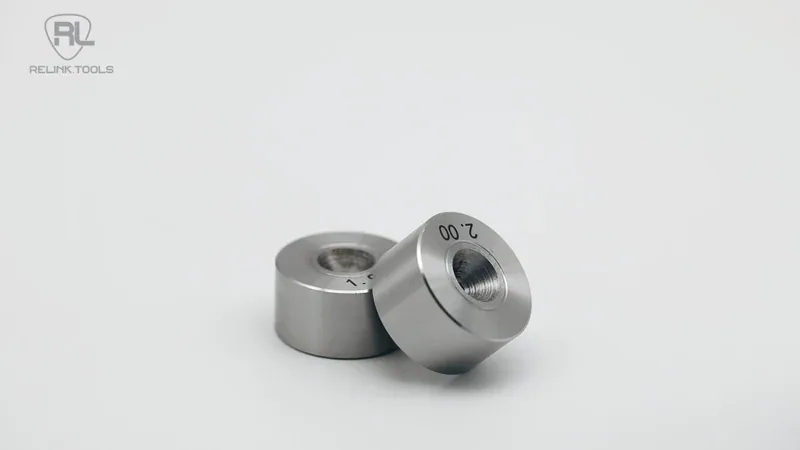
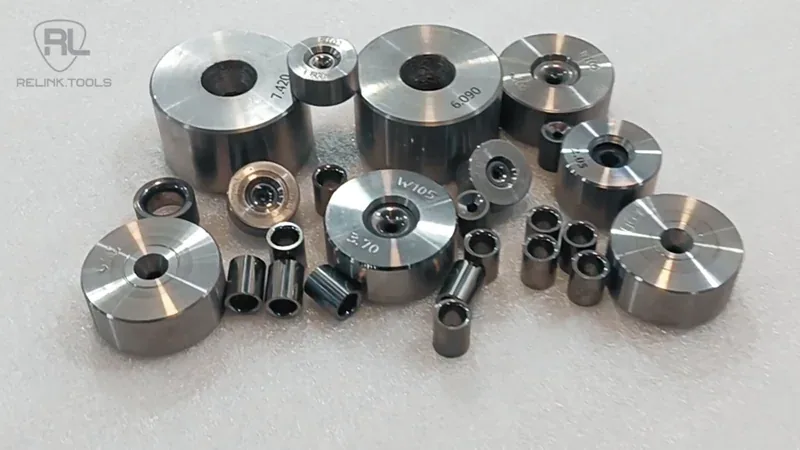
- Drawing dies by position — nano-coated for the running sizes, PCD for fine wire — for wet drawing of copper and aluminium.
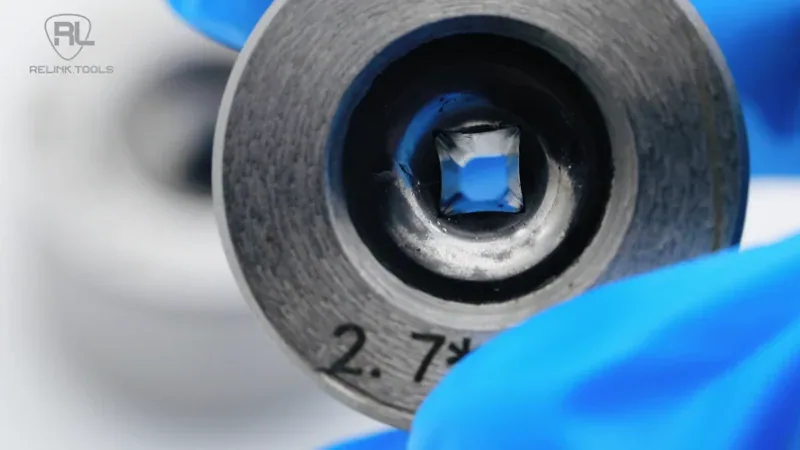
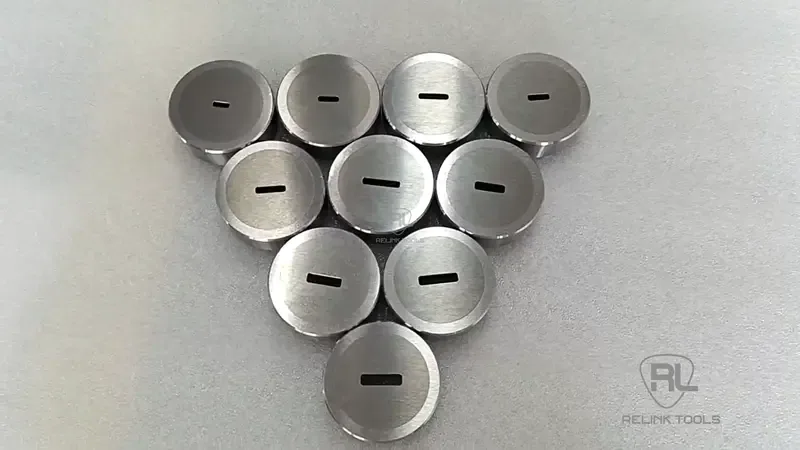
- Compacting dies and shaped dies for stranded and sector conductors, to drawing.
- Extrusion tips and dies made to fit your crosshead model.
- One supplier for the three stages that decide conductor quality.
- Copper / aluminium rod
- Rod breakdown
- Intermediate and fine drawing
- Bunching / stranding
- Extrusion
- Insulated conductor
What are you making?
Building wire and power cable
Solid and stranded copper or aluminium conductors with PVC or XLPE insulation. The compacting die sets the conductor diameter the extruder sees; the extrusion tip and die set the insulation thickness around it.
Fine wire and flexible cable
Many fine strands bunched into a flexible conductor. Fine-wire drawing is where PCD dies earn their place; the bunching die then shapes the conductor for the extruder.
Sector and shaped conductors
Sector-shaped and other profiled conductors for multi-core cable use shaped compacting dies made to drawing, and extrusion tooling matched to the profile.
What each stage needs
1. Rod breakdown and intermediate drawing
Copper and aluminium are drawn wet, in multi-die machines. Nano-coated dies are our suggestion for the running sizes: they hold the wire diameter and surface steady over long runs, which is what the extrusion line needs from them.
Supplied as: nano-coated and carbide dies · Made to: machine model and pass schedule · Ask for: rod and finished diameters, number of dies, machine model. → Nano-coated dies
2. Fine wire drawing
Multi-wire machines drawing many ends at once to fine sizes. PCD dies — self-supported for the finest sizes — keep the sizes matched across all the ends and can be recut.
Supplied as: PCD dies · Made to: machine model · Ask for: finished diameter and tolerance, number of ends, machine model. → PCD dies
3. Bunching, stranding and compacting
The strand is pulled through a compacting die that rounds it and closes the gaps between wires; sector conductors use a shaped die. A well-compacted, round conductor lets the extruder run the insulation at the minimum thickness the specification allows.
Supplied as: compacting dies, shaped dies · Made to: conductor drawing · Ask for: conductor construction, finished diameter or profile, line model. → Shaped and compacting dies
4. Extrusion
The tip guides the conductor into the crosshead and the die forms the insulation around it. Tips and dies are made to fit the crosshead model, in the sizes your product range needs.
Supplied as: extrusion tips and dies · Made to: crosshead model and insulation thickness · Ask for: crosshead model, conductor diameter, insulation wall, compound. → Extrusion tips and dies
What we need to quote
What you need, the machine or crosshead model, and an email or WhatsApp number. Then:
- Drawing dies: rod and finished diameters, number of dies or ends, machine model, copper or aluminium.
- Compacting and shaped dies: conductor construction (number and size of wires), finished diameter or profile drawing, line model.
- Extrusion tips and dies: crosshead model, conductor diameter, insulation wall thickness, compound.
- A photo or drawing of the worn tool.
Our suggestions
Judge the dies by the extrusion line, not by the die shop. On a cable line the cost of a worn drawing die shows up downstream: an oversize or out-of-round conductor makes the extruder put on more compound to hold the minimum wall, and a scratched wire is what fails the spark test. Die life matters; conductor size and surface matter more.
Compact the conductor properly before you insulate it. A round, closed strand lets you run the insulation at the thickness the specification requires and no more. Tell us the conductor construction and we size the compacting die to it.
Match the tip and die to the crosshead, not to a catalogue. Extrusion tooling is quoted by crosshead model and insulation wall. Send the model and the product range and we list the sets.
Questions cable plants ask
Which drawing dies should I use for copper and aluminium?
Nano-coated dies for the running sizes on the rod breakdown and intermediate machines; PCD dies on the fine-wire and multi-wire machines. Tell us the machine and the sizes and we propose the set position by position.
Why does the drawing die affect my insulation cost?
Because the extruder works to a minimum wall thickness. If the conductor is oversize, oval or rough, the operator adds compound to keep the thinnest point inside specification, and the surplus is wasted insulation. A die that holds size and surface keeps that surplus down.
Do you make compacting dies for stranded conductors?
Yes — round compacting dies and shaped dies for sector conductors, to your conductor drawing, in nano-coated carbide.
Do your extrusion tips and dies fit my crosshead?
We make them to fit the crosshead model you name, in the sizes your product range needs. Send the model and the conductor and wall sizes.
What do you need from me to quote?
Machine or crosshead model, conductor sizes, and for extrusion the insulation wall and compound. A photo of the worn tool helps.
Request a Quote
Get In Touch QuicklySend us your machine model or drawing, the wire or material, and the quantity. We will prepare a quotation.