

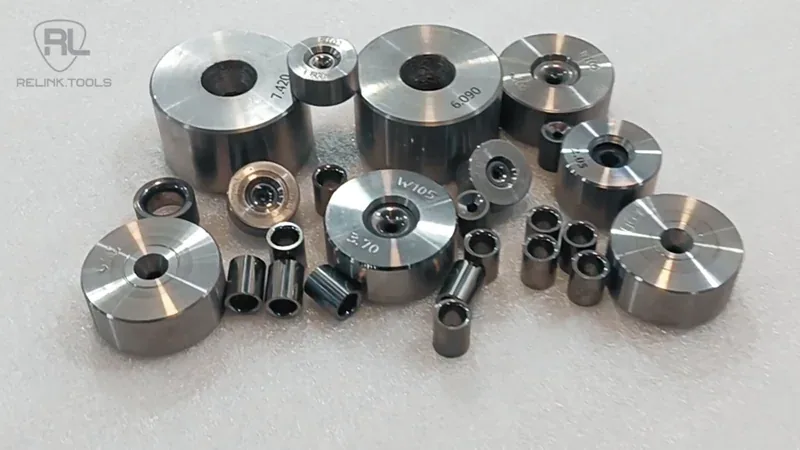
Wire Drawing Dies
Wire drawing dies in five materials — nano-coated, PCD, tungsten carbide, SSCD and natural diamond — supplied to your wire, your machine and your sizes.
Tell us the wire, the sizes and the monthly tonnage, and we will say which die we would recommend and why.
Overview
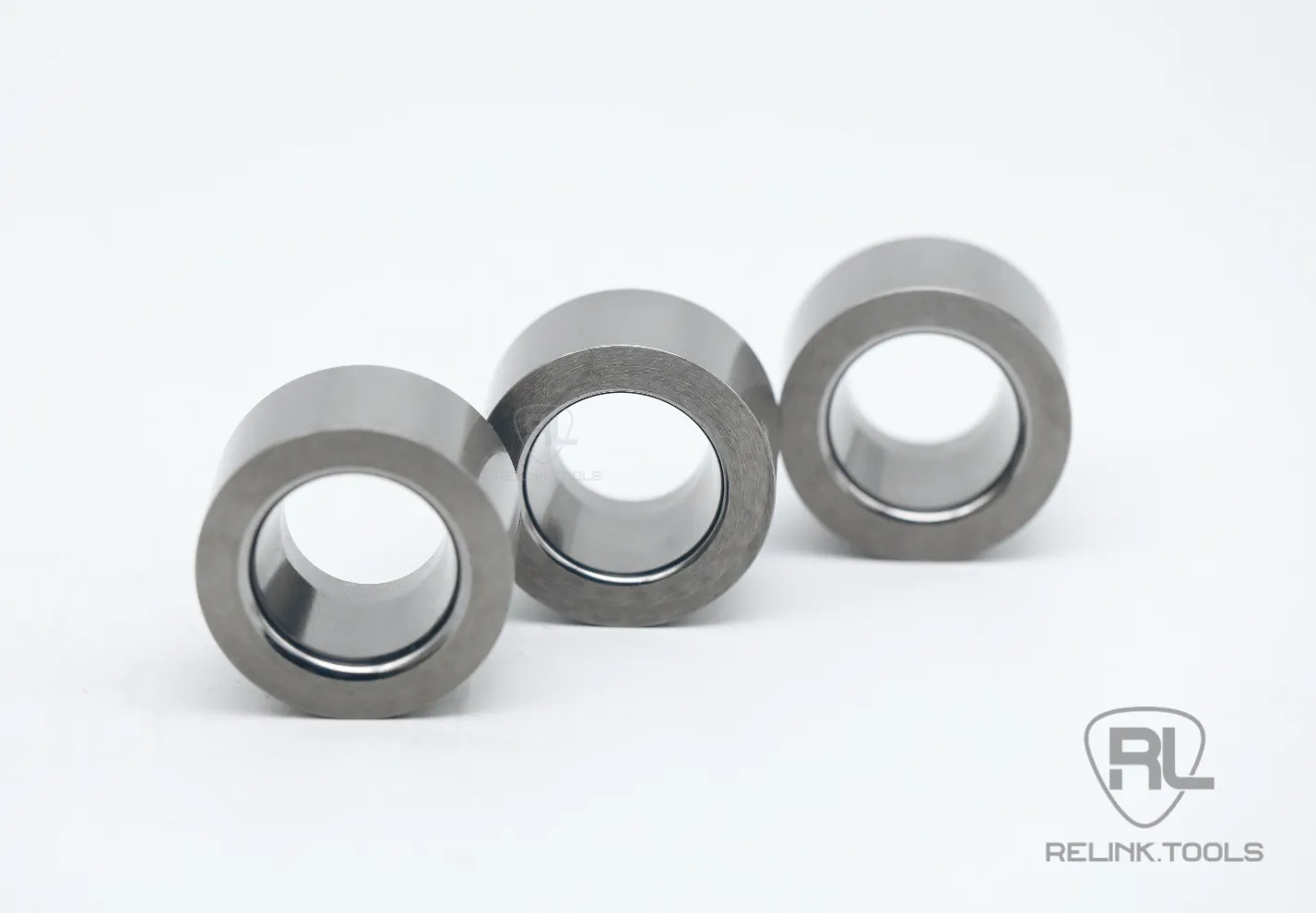
A wire drawing die is a hard, precisely shaped insert, mounted in a steel casing, that wire is pulled through to make it thinner. Each die takes one reduction, so a drawing machine runs the wire through a series of dies and capstans, one after another, until it reaches the finished diameter — up to twenty or more dies on a single line. The die is a wear part: the bore slowly opens up, and when the wire goes out of tolerance the die is replaced or, for some materials, recut to the next size.
Products
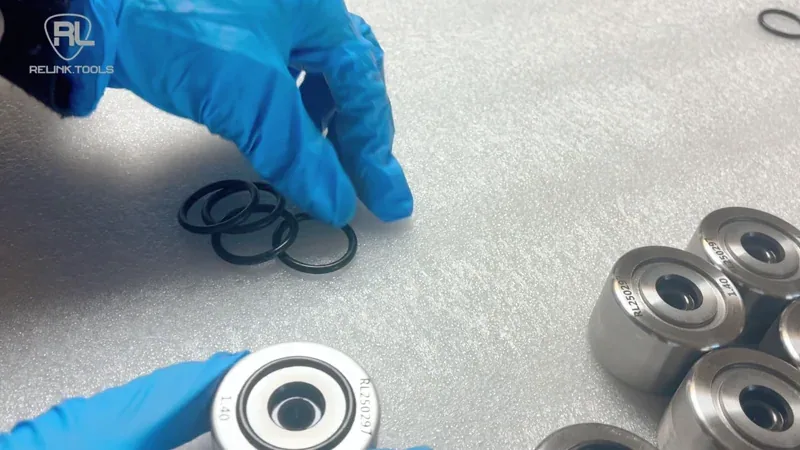
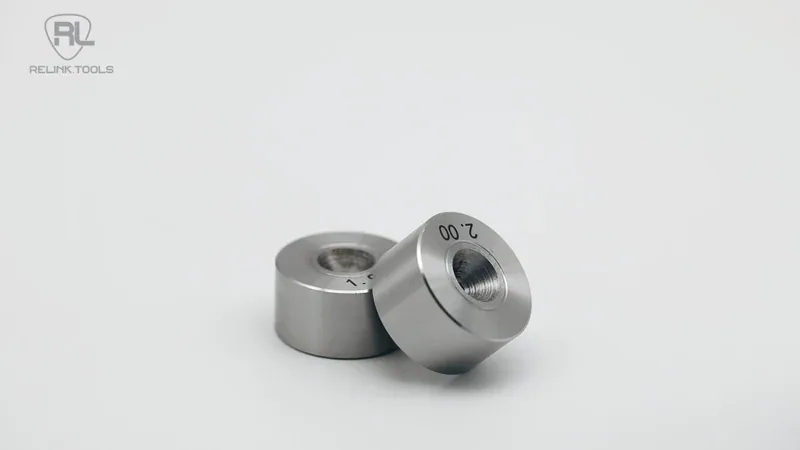
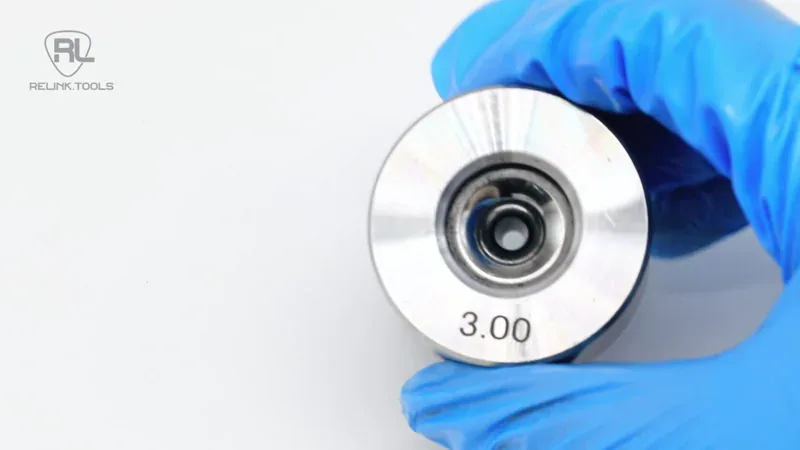
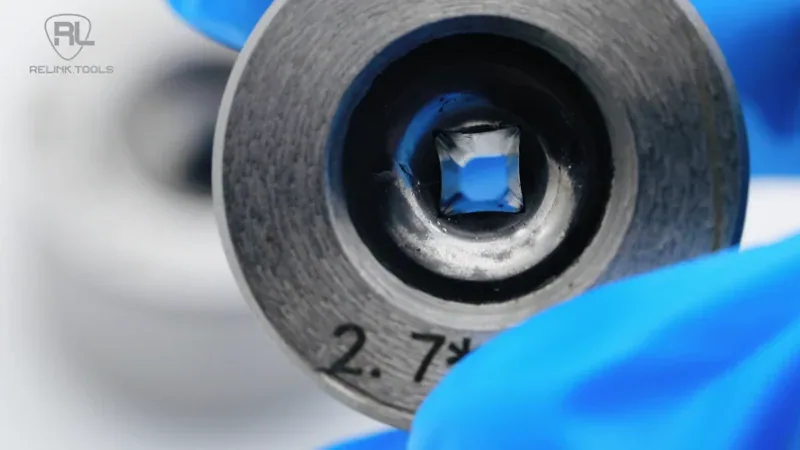
Key Features
Five die materials
Nano-coated, PCD, tungsten carbide, SSCD and natural diamond from one supplier — matched to the wire, not the other way round.
Selection, not just supply
Send the wire grade, the pass schedule and the tonnage; we tell you which passes to switch first and which to leave on carbide.
Quote from your machine or drawing
Machine model, die case size or a drawing is enough to quote; sizes and tolerances follow your specification.
Relink.Tools supplies drawing dies in five materials — nano-coated, PCD, tungsten carbide, SSCD and natural diamond — plus shaped dies for non-round wire. We do not push one material. Tell us the wire, the sizes and the speed, and we recommend the die that gives you the lowest die cost per tonne.
Which wire are these dies for?
Any metal wire that is drawn down in diameter: low-carbon steel wire for nails and mesh, high-carbon and spring wire, wire for steel rope, welding wire, stainless steel, and copper and aluminium conductors for cable.
Where the die sits in the machine
On a straight-line or multi-block drawing machine, each pass is the same arrangement: a lubricant box, then the die in its holder, then a capstan that pulls the wire through and feeds it to the next pass. The casing is sized to the machine's die holder, so when you send us the machine model or the casing dimensions, the die fits first time.
The wire itself comes in as rod from the pay-off, has its scale removed, and leaves the last pass as finished wire for the next process: nail making, cold heading and thread rolling, or cable extrusion.
Drawing dies or roll rings?
Plain wire can be reduced in two ways: pulled through drawing dies, or cold-rolled between carbide roll rings. Our recommendation: for large tonnages of a single wire size, plain roll rings are usually the cheaper route; for smaller lots and for frequent size changes, drawing dies cost less. As a rough guide, the crossover is around 500 tonnes a month per wire size. Drawing also gives tighter dimensional control and reaches finer sizes than rolling. Relink.Tools supplies both, so tell us your sizes and monthly tonnage and we will say which one we would run.
By production line
Five die materials at a glance
| Nano-coated | PCD | Tungsten carbide (TC) | SSCD | Natural diamond (ND) | |
|---|---|---|---|---|---|
| What it is | Carbide insert with a CVD nano-crystalline diamond coating in the bore | Diamond grains sintered at high pressure and temperature, self-supported or in a carbide support ring | Tungsten carbide particles in a cobalt binder | Synthetic single-crystal diamond, free of inclusions | Natural single-crystal diamond |
| Typical wire | Steel and non-ferrous wire, medium to large sizes | Copper, aluminium and other non-ferrous wire; steel wire in small sizes | Steel wire, large sizes, short runs | Fine and ultra-fine non-ferrous wire | Fine and ultra-fine non-ferrous and precious-metal wire |
| Size range | From under 1 mm up to large sizes, confirmed per enquiry | From fine sizes up to about 30 mm | Confirmed per enquiry | Fine sizes, confirmed per enquiry | Fine sizes, confirmed per enquiry |
| Wear life | Typically 10× or more the life of TC, depending on wire and pass | Tens of times longer than TC, depending on wire and pass | The baseline | Long, in fine sizes | Long, in fine sizes |
| Can it be re-sized? | No — replaced when worn | Yes — recut or re-polished to a larger size | Yes — recut to a larger size | Yes | Yes |
| Exposure to tungsten prices | Low | Low | High | Very low | Very low |
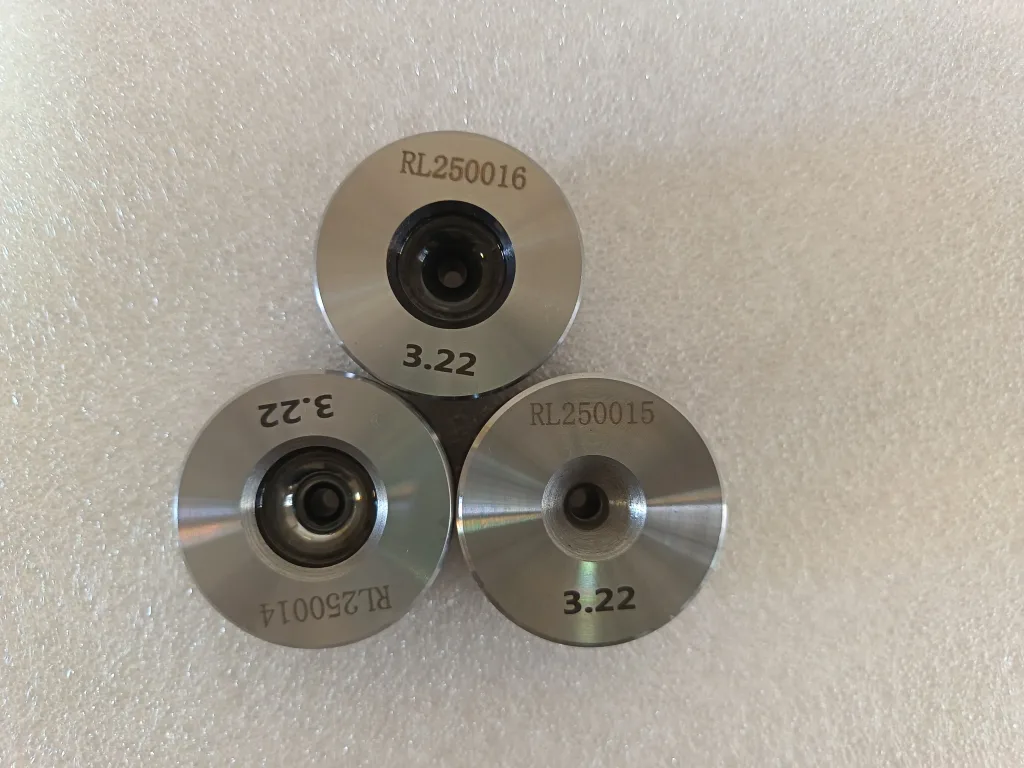
All types are supplied mounted in a steel casing. Approach angle, bearing length and hole size are made to your specification and confirmed per order.
Details by material: Nano-coated dies · PCD dies · Tungsten carbide dies · Shaped dies · Full comparison, including SSCD and natural diamond
Which die for your wire?
Our recommendation: start with nano-coated. It covers most steel and non-ferrous wire, and for most plants it gives the lowest die cost per tonne. Two cases point to PCD instead:
- Below about 2 mm. In small sizes PCD is usually the more economical choice.
- You re-size your dies. A nano coating cannot be repaired; a worn nano die is replaced. A PCD die can be recut to the next size and used again.
| Your wire | Start with | Also consider |
|---|---|---|
| Low-carbon steel — nail wire, mesh wire, welding wire | Nano-coated | PCD below about 2 mm |
| High-carbon, spring and rope wire | Nano-coated | TC for short runs and trials |
| Stainless steel | Nano-coated | — |
| Copper and aluminium conductors | Nano-coated; PCD below about 2 mm | — |
| Ultra-fine non-ferrous and precious-metal wire | Natural diamond or SSCD | — |
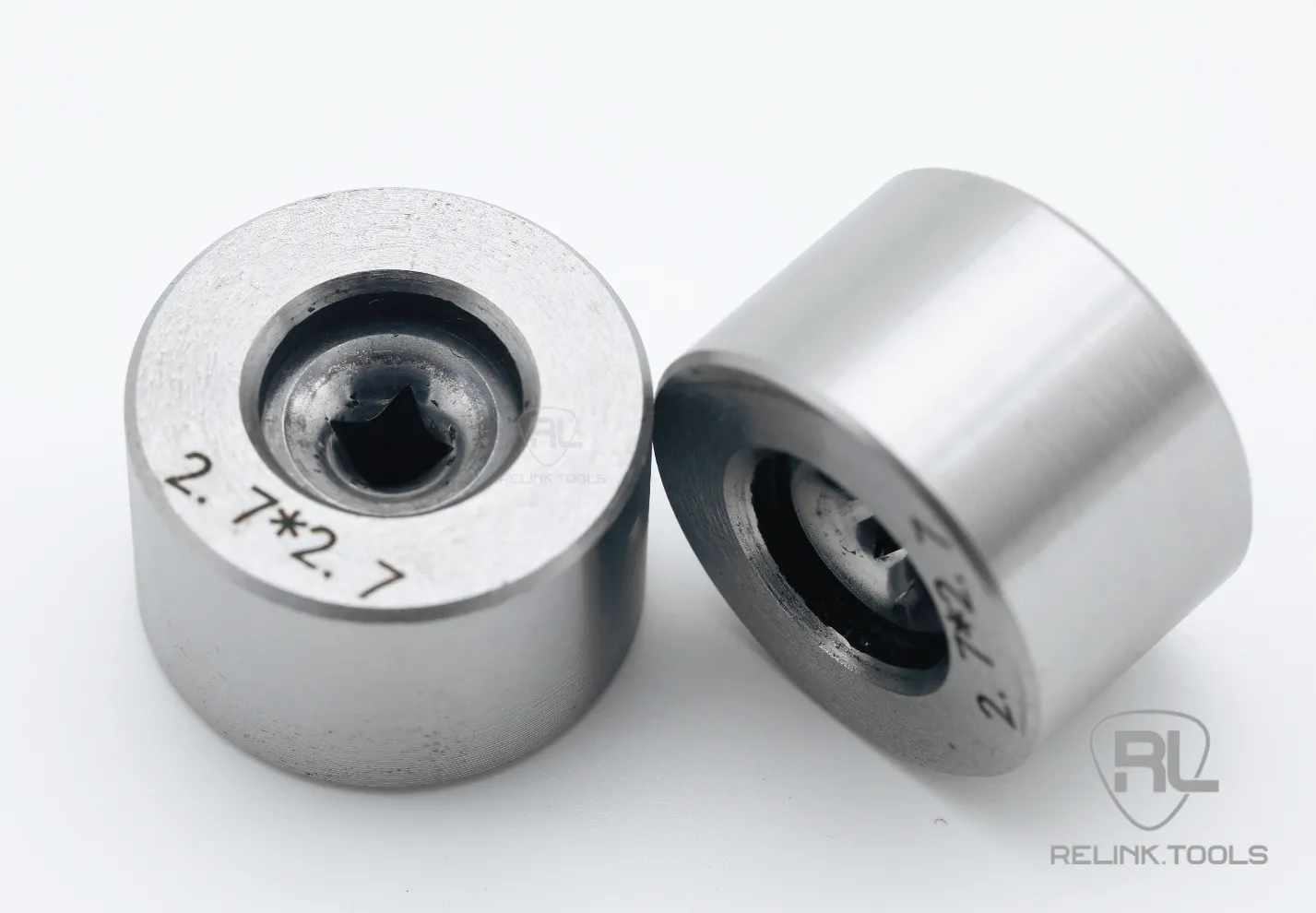
| Square, hexagonal, flat and other profiles | Shaped dies in nano-coated, PCD or TC | — |
Dry drawing? The lubricant matters as much as the die — see wire drawing powder.
Nano, PCD or carbide — the short version
- Nano-coated. A carbide body does the structural work; the diamond coating does the wearing. Long life across steel and non-ferrous wire, and large sizes are available. The coating cannot be repaired.
- PCD. Diamond through the full working depth, so it can be recut to a larger size. Usually the economical choice in small sizes.
- Tungsten carbide. The lowest purchase price and the shortest life. It still makes sense for short runs, trials and very large sizes — and its price follows the tungsten market.
See the full comparison, including SSCD and natural diamond.
FAQ
What is a wire drawing die?
A wire drawing die is a hard insert with a tapered bore, mounted in a steel casing. Wire is pulled through the bore and comes out thinner, rounder and with a smoother surface. A drawing machine uses a series of dies, each taking one reduction.
Tungsten carbide, nano-coated or PCD — which one fits my wire?
For most steel and non-ferrous wire, start with nano-coated. Choose PCD below about 2 mm, or if you re-size worn dies. Choose tungsten carbide for short runs and trials, where purchase price matters more than die life.
What makes one carbide die last longer than another?
Two things. The first is the powder: how the tungsten powder is washed and graded decides the microstructure of the carbide, and the microstructure decides how it wears. The second is machining accuracy: it decides how the insert sits in its casing and how the drawing load spreads through it. A cheap die usually saves on both.
Do you supply dies for cable and non-ferrous wire?
Yes. Nano-coated and PCD dies are both used for copper and aluminium conductors, and natural diamond and SSCD dies for fine wire. For insulation and sheathing we also supply extrusion tips and dies.
Can drawing dies be recut or re-polished?
It depends on the material. PCD, natural diamond, SSCD and tungsten carbide dies can be recut to a larger size once worn; wire plants usually do this in their own die shop or through a local die service. Nano-coated dies cannot be repaired and are replaced.
Should I draw plain wire or cold-roll it?
Both work. As a rough guide, above about 500 tonnes a month of one wire size, plain roll rings are usually cheaper to run; below that, drawing dies are. Drawing also gives tighter diameter control. Send us your sizes and tonnage and we will recommend one.
Why does die-to-die consistency matter on a multi-pass machine?
On a slip-type drawing machine, each die is sized to take slightly more reduction than the capstans do, and that margin has to cover die tolerance and wear. If one die in the set wears oversize, the pass after it loses its margin and the wire starts to break. That is why a consistent set matters more than the life of any single die — and why every order ships with a full dimensional inspection report.
What do you need from me to quote?
The die material (or "not sure"), the wire grade, the inlet and outlet sizes, and the quantity. Casing dimensions or the machine model help if you have them. For a full die set, also give us the drawing machine model. Use the form below, or the technical quote page.
What is the lead time?
Typically about 15 days, confirmed by item and quantity.
Product details display
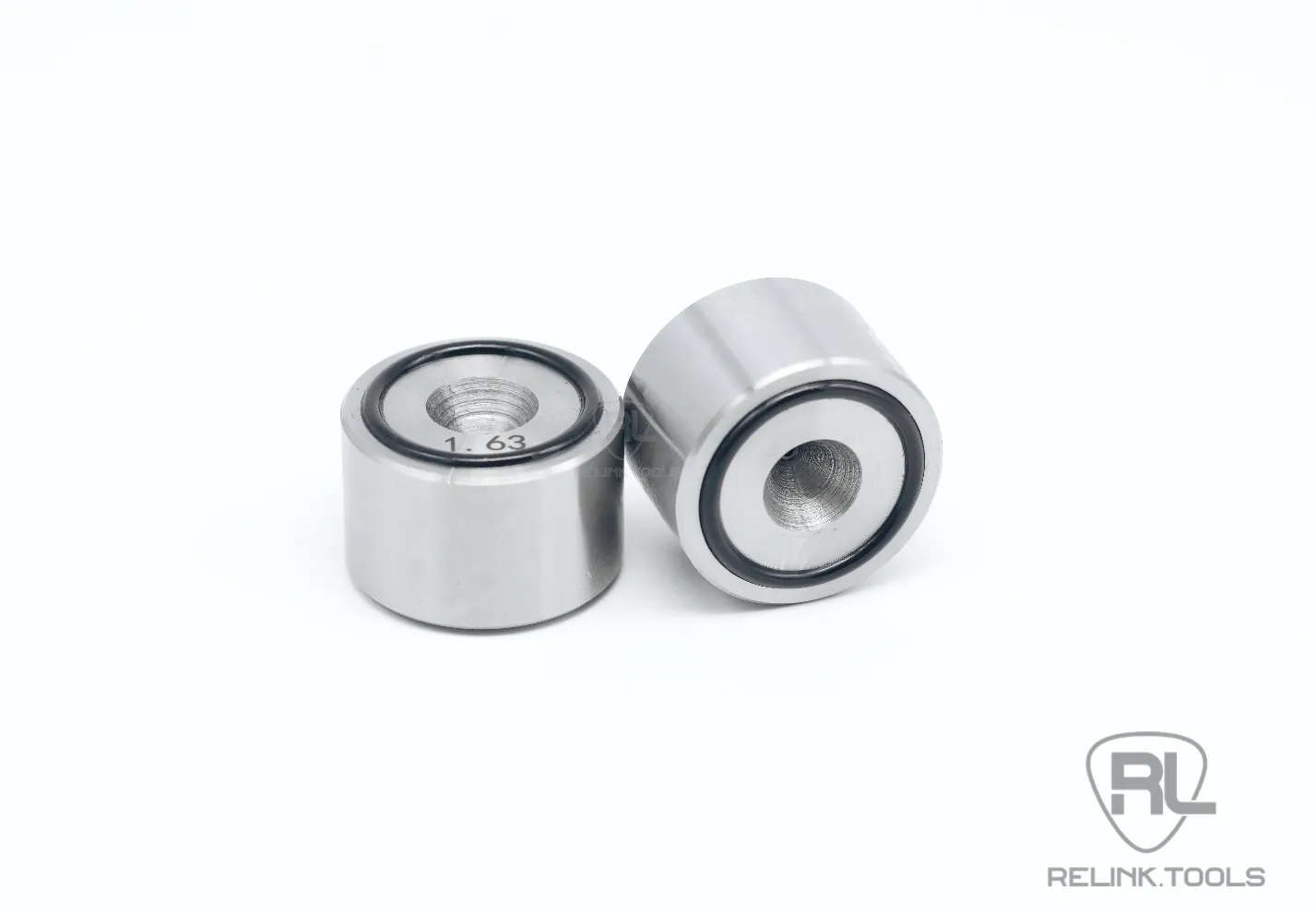
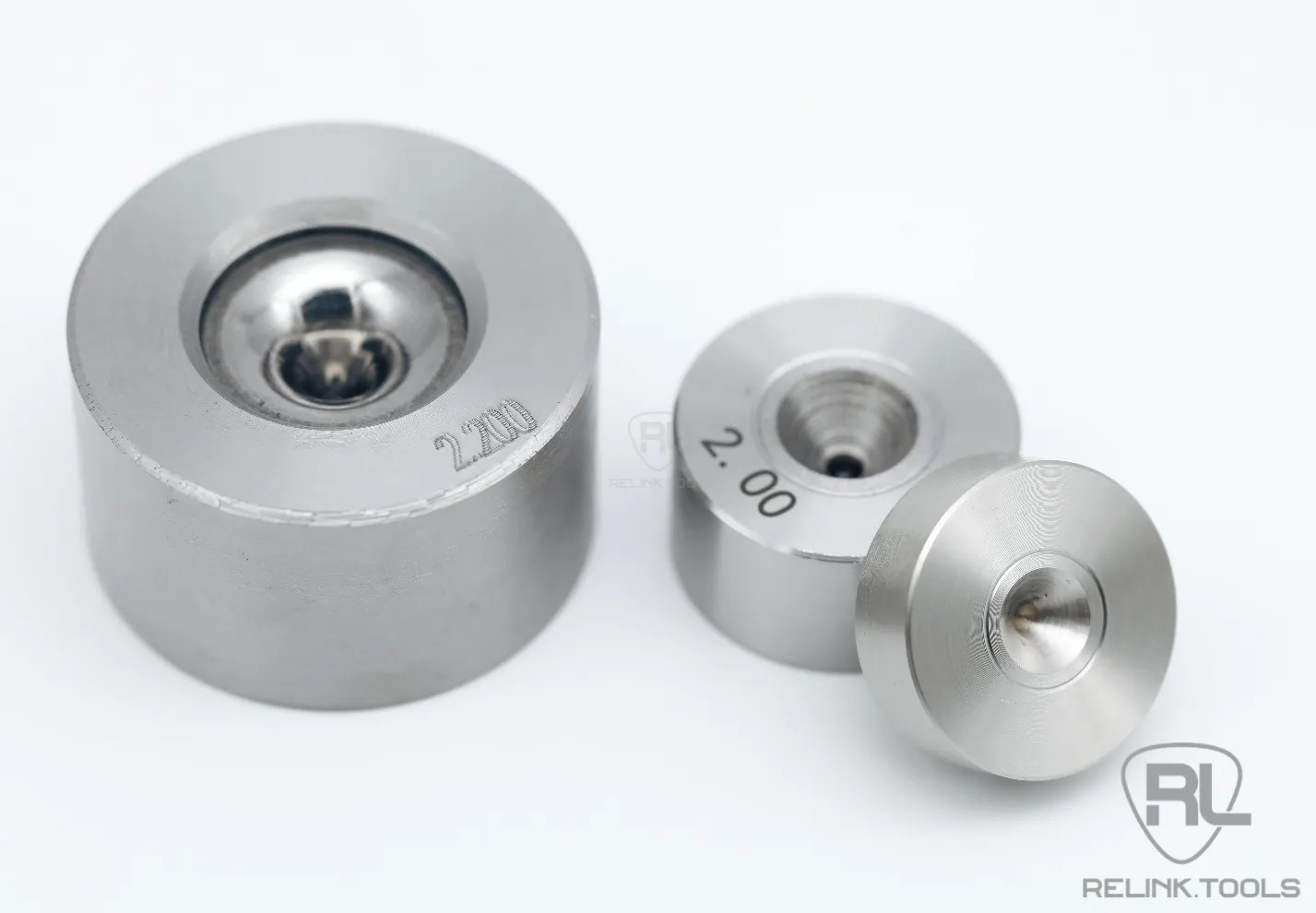
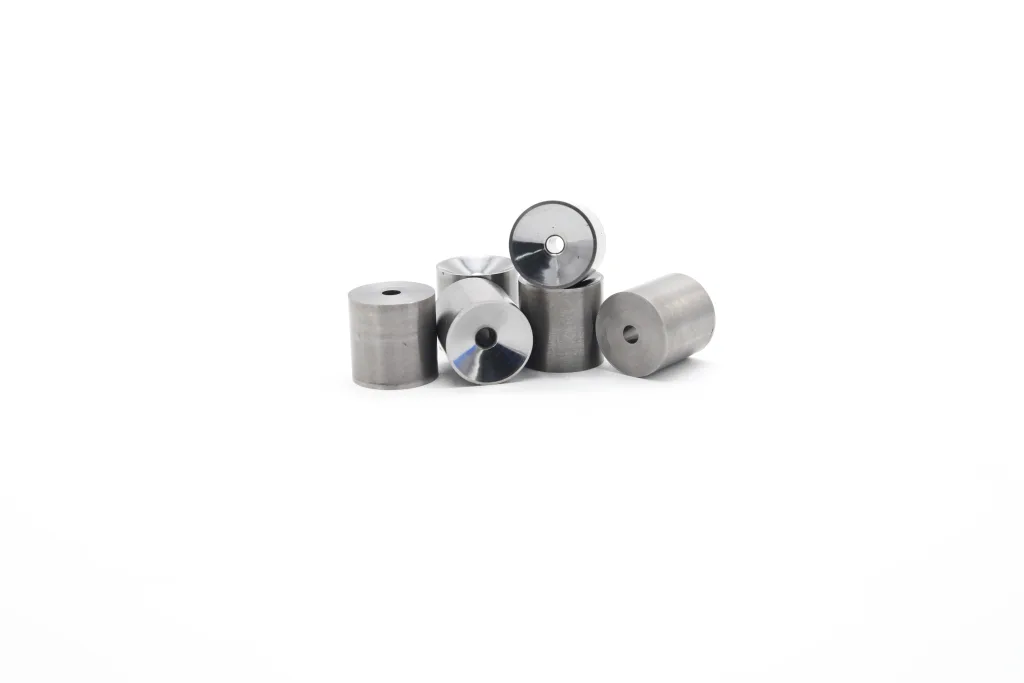
Request a Quote
Get In Touch QuicklySend us your machine model or drawing, the wire or material, and the quantity. We will prepare a quotation.