

Tooling for a fastener plant: from wire to headed, rolled parts
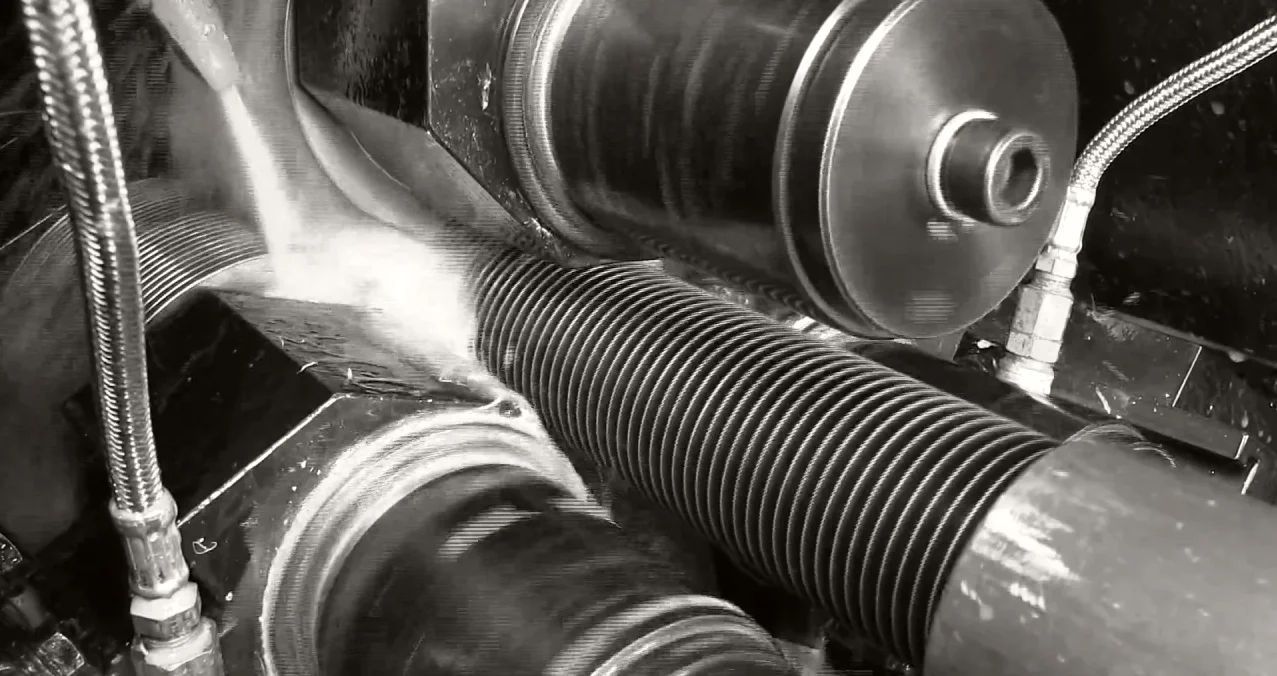
From wire to finished fastener
A bolt or screw plant draws wire to the heading size, cold-forms the head and shank in a multi-station header, trims or extrudes where the part needs it, and rolls the thread on afterwards. Each station carries its own tooling, and all of it is specific to the machine and to the part.
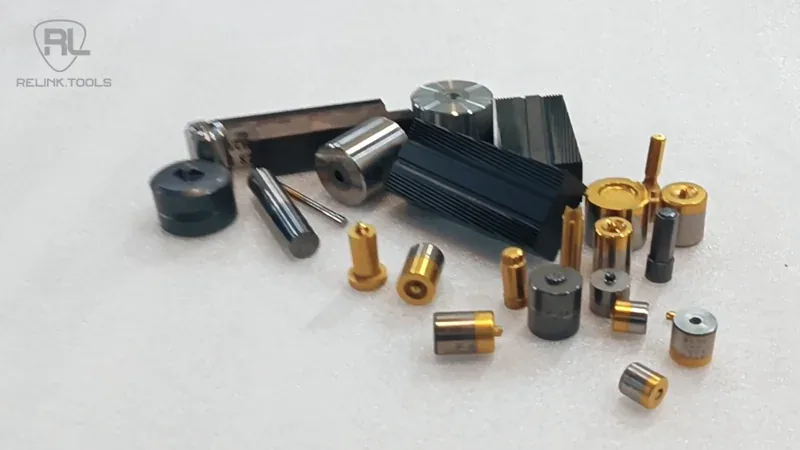
Relink.Tools supplies the drawing dies, the cold heading tooling — punches, dies, trimming dies, knockout pins and extrusion dies — and the thread rolling dies for general-purpose fasteners, made to your machine model, your drawing or your worn sample, with a full dimensional report on every delivery.
What you get
- Heading tooling to drawing or to a sample, in carbide-insert or tool-steel construction as the station needs.
- Thread rolling dies — cylindrical sets or flat pairs — to the thread form and the machine.
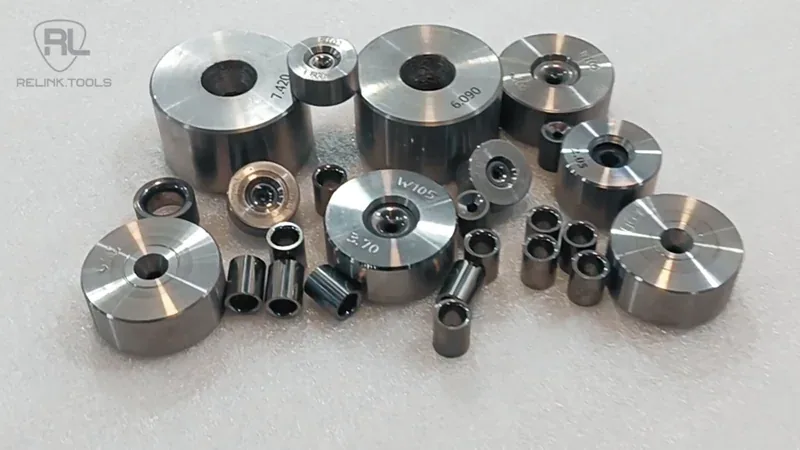
- Drawing dies for the heading wire.
- A full-dimension inspection report with the goods.
- Wire rod / coil
- Wire drawing
- Cold heading
- Trimming / extrusion
- Thread rolling
- Finished fastener
What are you making?
Bolts and screws
Headed and threaded parts: drawing dies for the wire, a heading tool set per part per station, trimming dies for hex heads, and thread rolling dies — cylindrical for larger diameters and long runs, flat for screws and high-speed rolling.
Nuts
Multi-station nut formers use their own punch and die sets and knockout pins; the thread is cut, not rolled, so no rolling dies. We tool the forming stations to drawing.
Special and semi-standard parts
Shoulder bolts, pins, rivets and stepped parts: extrusion dies for the reduced sections, trimming dies for non-round heads, and rolling dies for whatever thread or knurl the drawing calls for. All to drawing.
What each stage needs
1. Drawing the heading wire
Low- and medium-carbon and alloy wire drawn to the heading diameter, usually in a few passes. Size and surface matter more than speed here.
Supplied as: carbide and nano-coated drawing dies · Made to: pass schedule or machine model · Ask for: rod and finished diameters, wire grade, number of passes. → Wire drawing dies
2. Cold heading
The header cuts a slug, then forms it in one to six stations. Each station has a die and a punch; the knockout pin ejects the part. Dies are made with a carbide insert in a steel case for the stations that wear, or in tool steel where impact matters more than wear. Fits Nedschroef, Sacma, Hatebur and the Taiwanese and Korean headers in common use.
Supplied as: punches, dies, knockout pins · Made to: machine model and part drawing, or worn sample · Ask for: machine model, part drawing, station layout if you have it. → Cold header tooling
3. Trimming and extrusion
Hex and square heads are trimmed in a trimming die; reduced shanks and points are formed in an extrusion die. Both are quoted with the heading set.
Supplied as: trimming dies, extrusion dies · Made to: part drawing · Ask for: part drawing, machine model. → Cold header tooling
4. Thread rolling
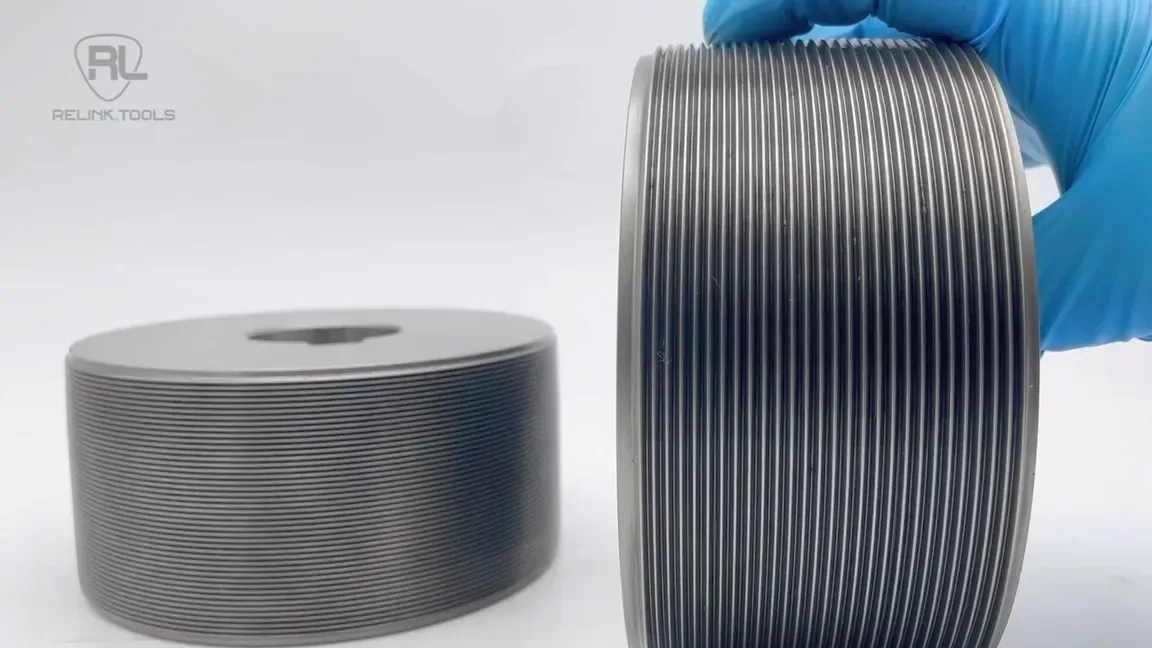
Cylindrical dies — two or three to a set — for thread rolling machines, in tool steel or carbide; flat die pairs for flat-die rollers. Metric, UNC / UNF, BSW, ACME and special forms, plus knurls and splines, to the thread specification.
Supplied as: cylindrical die sets, flat die pairs · Made to: thread specification and machine · Ask for: thread form and size, machine model, dies per set. → Thread rolling dies
What we need to quote
What you need, the machine model, and an email or WhatsApp number. Then:
- Heading tooling: machine model, part drawing (or a photo and the main dimensions of the worn tool), which stations, carbide or tool steel if you have a preference.
- Thread rolling dies: thread form and size, machine model, cylindrical or flat, dies per set.
- Drawing dies: rod and finished diameters, wire grade, number of passes.
- Tolerances that are tighter than standard — tell us up front; they decide how we quote.
Our suggestions
Send the drawing, or the worn tool. Heading tooling is made to the part, not picked from a catalogue. A part drawing and the machine model is the complete brief; a worn punch or die with the main dimensions is the next best thing. We measure, draw and quote from either.
Match the construction to the station. Carbide inserts belong where the tool wears — the finishing die, the extrusion die; tool steel belongs where the tool takes the shock — early punches, some knockout pins. Mixing the two in one set is normal and keeps the cost where it does the most good.
Pick the thread rolling method by run length and size. Cylindrical dies for long runs and larger diameters, flat dies for high-speed screw rolling. Tell us the thread specification and the machine, and we quote the die form that fits.
Questions fastener plants ask
Can you tool a part from a drawing only?
Yes. Part drawing plus machine model is the standard brief for heading tooling. If you have no drawing, send the worn tooling with its main dimensions and we draw it.
Do you supply the whole set for a multi-station header?
Yes — punches, dies, knockout pins, trimming and extrusion dies for all the stations of the part, in carbide-insert or tool-steel construction station by station.
Which thread rolling dies do you make?
Cylindrical die sets of two or three and flat die pairs, in tool steel or carbide, for metric, UNC / UNF, BSW, ACME and special forms, knurls and splines.
What comes with the delivery?
A full-dimension inspection report for each tool, against your drawing.
What range of fasteners is this for?
General-purpose and standard fasteners — bolts, screws, nuts, pins and rivets for construction, machinery and general industry. If your part has aerospace-grade or safety-critical tolerances, tell us up front and we will say honestly whether it is within our range.
Request a Quote
Get In Touch QuicklySend us your machine model or drawing, the wire or material, and the quantity. We will prepare a quotation.