

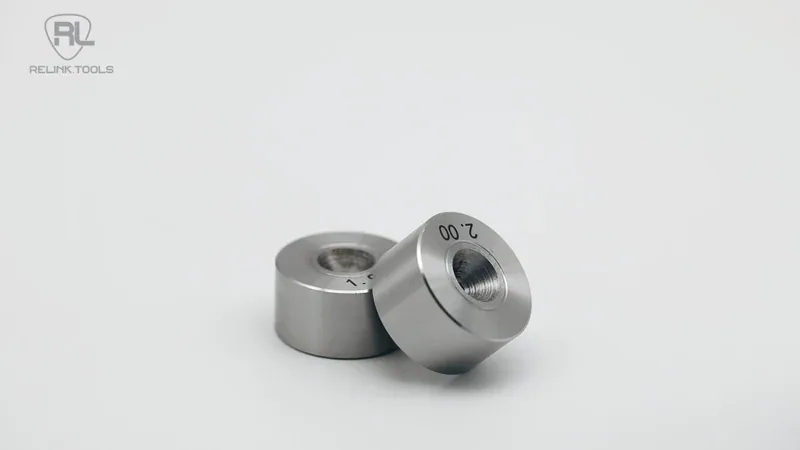
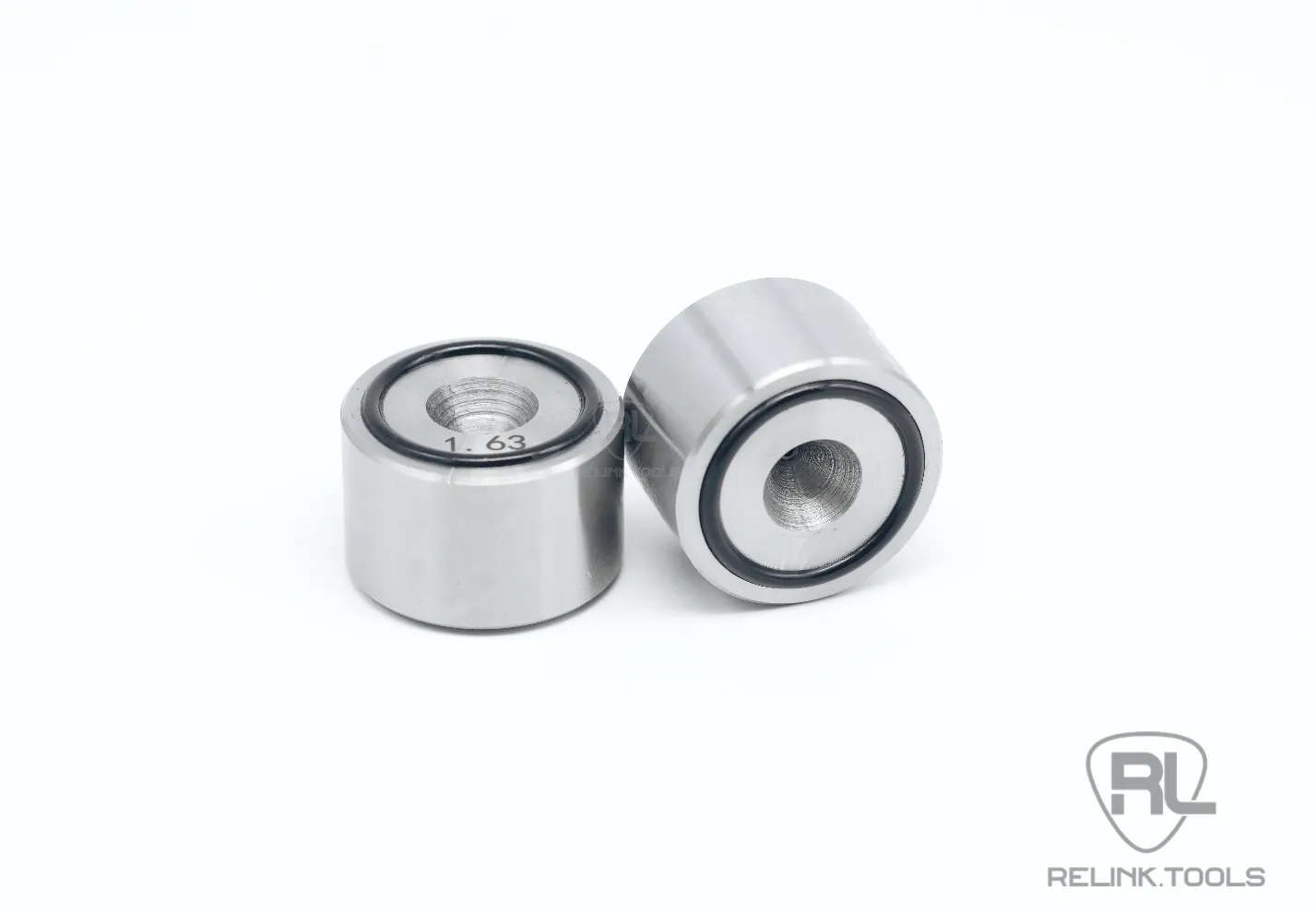
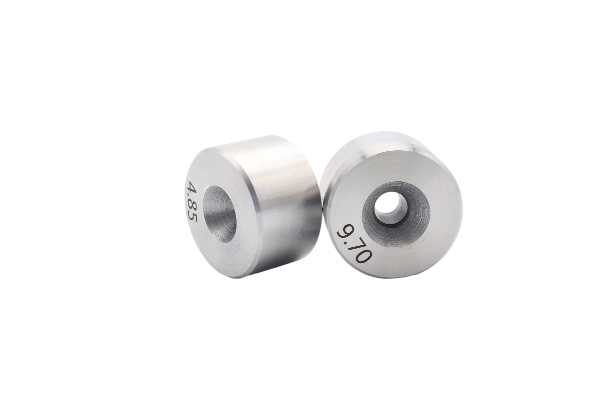
PCD Wire Drawing Dies
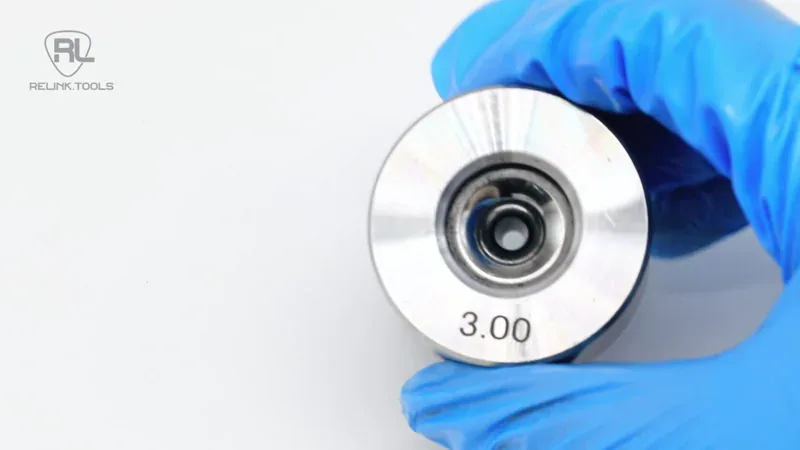
PCD is the standard choice for copper and aluminium conductor wire, where speed and size control matter most, and it also draws steel wire in small sizes. Relink.Tools supplies PCD dies from fine sizes up to about 30 mm, in self-supported and carbide-supported blanks, with the grain size and bore geometry matched to your wire.
| Working material | Polycrystalline diamond (PCD), sintered at high pressure and temperature |
|---|---|
| Blank type | Carbide-supported (diamond core in a tungsten carbide ring) or self-supported (solid PCD) |
| Bore size | From fine sizes up to about 30 mm; confirmed per enquiry |
| Casing | Steel casing, sized to your die holder; send the machine model or casing dimensions |
Category: Wire Drawing Dies
A PCD wire drawing die is a die whose working part is polycrystalline diamond: fine diamond grains sintered together under very high pressure and temperature into a solid blank, which is then pierced, shaped and polished to the drawing profile and mounted in a steel casing. Because the diamond goes all the way through the working depth, a PCD die can be recut to a larger size when it wears, and used again.
Overview
Overview
Self-supported vs carbide-supported PCD
PCD blanks come in two constructions, and the choice affects what the die can do.
- Carbide-supported. The diamond core is bonded inside a tungsten carbide ring. The ring reinforces the diamond, which is what you want for harder wire and for the larger hole sizes; most PCD dies above the small sizes are made this way.
- Self-supported. A solid diamond blank with no ring. It is used for the smaller sizes and for wire where surface finish is critical — fine non-ferrous wire and high-carbon tyre cord, for example — and, being electrically conductive, it can be pierced and shaped by EDM.
Our recommendation: tell us the wire and the size and leave the blank type to us; if you have a preference from your current dies, say so and we will match it.
When PCD is the right die — and when nano-coated is
Our recommendation across the range is to start with nano-coated dies, with two cases that point to PCD instead:
- Bores below about 2 mm. In the small sizes PCD is usually the more economical choice.
- You recut worn dies. PCD can be re-polished to the next size and go back on the line; a nano coating cannot.
A PCD die typically lasts much longer than a tungsten carbide die, depending on the wire and the pass. The diamond surface also has low friction and conducts heat well, so the die runs cooler and the wire comes out with a better finish at higher speed.
On tyre cord, rope wire and other fine high-carbon wire, the case for PCD is about the wire as much as the die. Our recommendation: move the last two or three passes from carbide to PCD. Plants that do this report better torsion results on the finished wire and steadier running in the finest sizes, where a full set of carbide dies can struggle to run at all.
Does a PCD die depend on tungsten prices?
Very little. A carbide-supported blank has a tungsten carbide ring, so there is some tungsten in the die, but it is a small part of the price; a self-supported blank has none. With a life far longer than a carbide die, the tungsten bought per tonne of wire drawn is close to nothing either way.
Specifications
PCD die specifications
| Working material | Polycrystalline diamond (PCD), sintered at high pressure and temperature |
| Blank type | Carbide-supported (diamond core in a tungsten carbide ring) or self-supported (solid PCD) |
| Grain size | Typically 1 µm to 50 µm, with 5 µm and 25 µm the most common choices. Finer grain for surface finish; coarser grain for wear resistance on harder or more abrasive wire |
| Bore size | From fine sizes up to about 30 mm; confirmed per enquiry |
| Bore geometry | Entrance, approach angle, bearing length and back relief made to your specification, or to suit the wire and reduction if you leave it to us |
| Casing | Steel casing, sized to your die holder; send the machine model or casing dimensions |
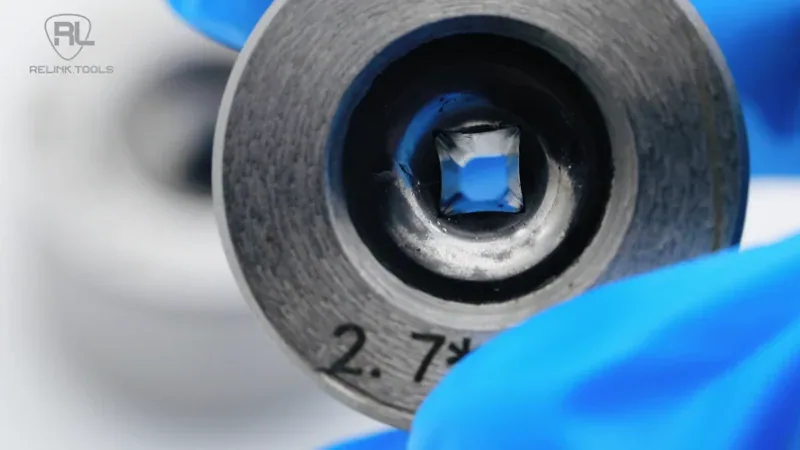
| Shaped bores | Available — square, hexagonal, rectangular and other profiles; see shaped dies |
| Wet or dry drawing | Both |
| Re-sizing | Yes. A worn PCD die can be re-polished to the next larger size, usually more than once |
All sizes and geometries are confirmed on the order. For a full material comparison, see wire drawing die materials compared.
Which wire
Which wire is a PCD die for?
| Your wire | Our recommendation |
|---|---|
| Copper and aluminium conductors — power cable, magnet wire, building wire | PCD below about 2 mm; nano-coated above |
| Copper alloy and other non-ferrous wire | PCD in the small sizes; nano-coated above about 2 mm |
| Welding wire | PCD in the finishing sizes; nano-coated for the rest of the line |
| High-carbon steel — tyre cord and fine spring wire | PCD (self-supported) in the fine sizes; nano-coated above |
| Low-carbon and stainless steel | Nano-coated; PCD only below about 2 mm |
| Stranded and bunched conductors (compacting dies) | Nano-coated, to the conductor profile |
| Ultra-fine non-ferrous and precious-metal wire | Natural diamond or SSCD — see the comparison |
Dry drawing? The lubricant matters as much as the die — see wire drawing powder.
Compare
PCD, nano-coated or carbide — the short version
- PCD. Diamond through the full working depth. Tens of times the life of carbide, and it can be recut to a larger size when worn. The economical choice in the small sizes.
- Nano-coated. Carbide body, diamond surface. Long life and available in large sizes, but the coating cannot be repaired. Our first choice above about 2 mm.
- Tungsten carbide. Lowest price, shortest life, and its price follows the tungsten market. Right for short runs and trials.
See the full comparison, including SSCD and natural diamond.
FAQ
FAQ
What is a PCD wire drawing die?
A drawing die whose working part is polycrystalline diamond — diamond grains sintered into a solid blank under very high pressure and temperature — mounted in a steel casing. The diamond goes right through the working depth, which is why a PCD die can be recut when worn.
Self-supported or carbide-supported PCD — which do I need?
Carbide-supported for most sizes and for harder wire: the carbide ring reinforces the diamond. Self-supported for the small sizes and for wire where surface finish is critical, such as fine non-ferrous wire and tyre cord. If you are not sure, tell us the wire and the size and we will choose.
Which grain size should I choose?
PCD blanks come in grain sizes from about 1 µm up to 50 µm; 5 µm and 25 µm cover most wire. Finer grain gives a better surface finish; coarser grain gives more wear resistance on harder or more abrasive wire. We select the grain for the wire you name, and confirm it on the order.
Can PCD dies draw steel wire?
Yes, in the small sizes — self-supported PCD is used for high-carbon tyre cord, for example. Above about 2 mm we recommend nano-coated dies for steel instead.
Can a worn PCD die be re-polished to a larger size?
Yes. When a wear ring forms in the bore, the die can be polished out and resized to the next size up, and a PCD die will usually take this more than once. Wire plants do this in their own die shop or through a local die service.
PCD or nano-coated — how do I choose?
Below about 2 mm, PCD. If you recut worn dies, PCD. Otherwise nano-coated: it comes in large sizes and gives long life on steel and non-ferrous wire alike. See the full comparison.
What do you need from me to quote?
The wire grade, the inlet and outlet sizes, the drawing speed if you know it, the blank type if you have a preference, and the quantity. Casing dimensions or the machine model help the die fit first time. For a full die set, also give us the drawing machine model. Use the form below, or the technical quote page.
Request a Quote
Get In Touch QuicklySend us your machine model or drawing, the wire or material, and the quantity. We will prepare a quotation.