

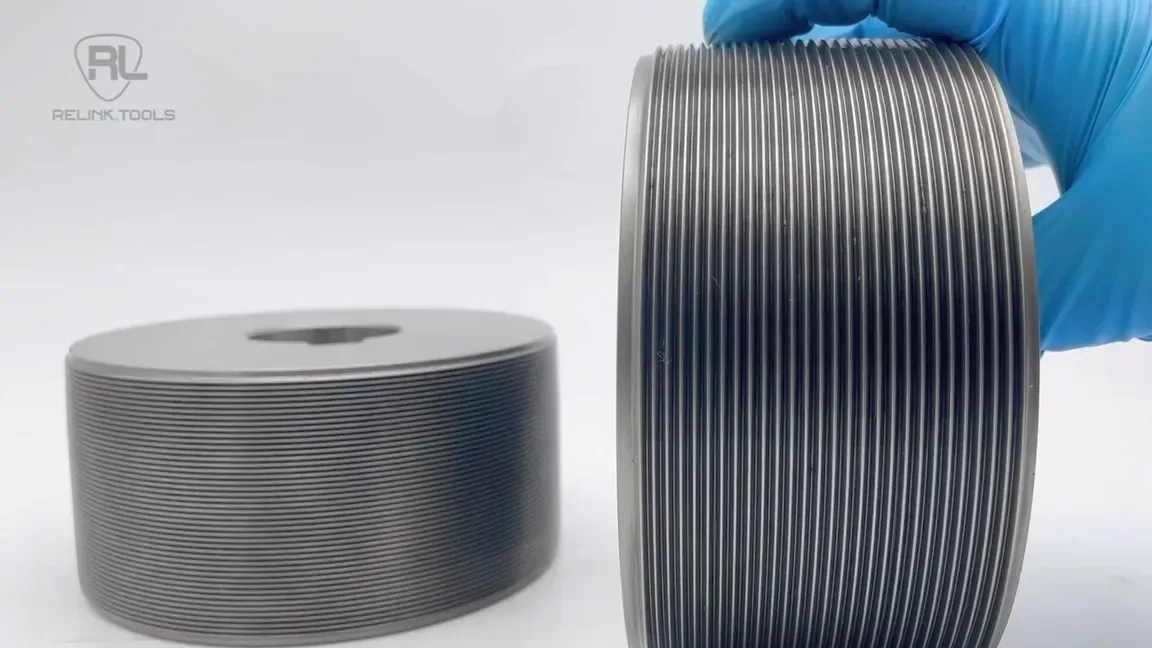
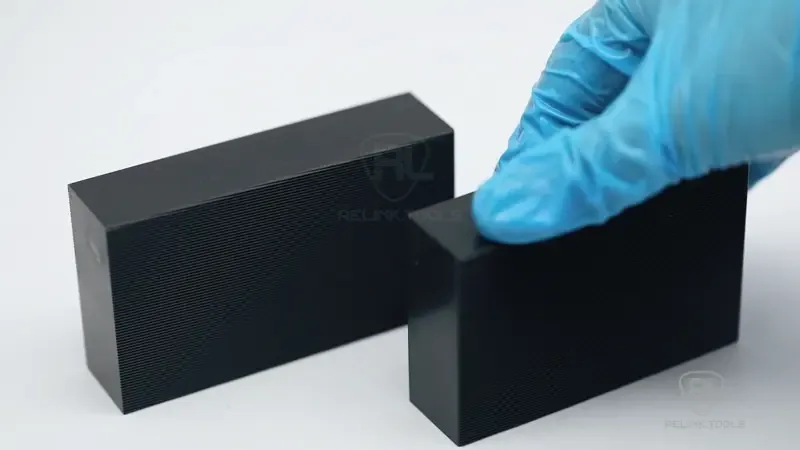
Thread Rolling Dies
Relink.Tools supplies both main types: flat thread rolling dies for screws and bolts made on flat-die machines, and cylindrical thread rolling dies for larger, longer or more precise threads, plus splines and knurls. Both are supplied to your machine and thread specification.
Category: Fastener Tooling
A thread rolling die is a hardened tool that forms an external thread by pressing its profile into a rotating blank, cold, without cutting any metal away. The blank is squeezed between two or three dies, the metal flows up into the die's grooves, and the thread appears in a single pass. Because the grain of the metal follows the thread form instead of being cut through, a rolled thread is stronger and has a better surface than a cut one, and the blank starts smaller, so less material is used.
Overview
Overview
Where thread rolling sits in fastener production
Wire is drawn to size, cut and headed on a cold header, and the headed blank then goes to the thread roller — it is the last forming step before heat treatment and plating. The dies are wear parts: the thread crests on the die round off with use, and when the rolled thread goes out of gauge the dies are changed. We supply the tooling for the step before as well — see cold header tooling. For threading nails rather than screws, see planetary dies.
Specifications
Flat and cylindrical dies at a glance
| Flat thread rolling dies | Cylindrical thread rolling dies | |
|---|---|---|
| How they work | A pair of flat dies: one stationary, one reciprocating. The blank rolls between them and is threaded in one stroke | Two or three round dies turning in the same direction around the blank |
| Rolling methods | One stroke per part | In-feed (the dies close radially on a blank that stays in place) or through-feed (the blank travels axially through the dies) |
| Typical parts | Bolts, machine screws, self-tapping screws, wood screws, drywall screws | Larger and longer threads, threaded rod, precision threads, and non-thread forms |
| Thread forms | To the screw standard you name | UNC, UNF, BSW, metric, ACME, ball-screw and pipe threads; also splines and knurls |
| Die material | Tool steel, heat-treated and nitrided | Tool steel or tungsten carbide |
| Supplied as | Matched pairs, to the machine model | Sets of two or three, to the machine and thread specification |
All dimensions and thread data are confirmed on the order.
Compare
Flat or cylindrical — which do you need?
It is usually decided by the machine you already have and the part you make.
- Flat dies are the standard for high-volume screws and bolts. A flat-die roller threads one part per stroke at high speed, and the dies are simple to set. If you make machine screws, tapping screws, wood screws or drywall screws, this is almost certainly what your machine takes.
- Cylindrical dies are used when the thread is larger, longer or needs closer control than a flat-die machine gives, or when the part is not a screw at all — splines, knurls, worm and ball-screw forms. With in-feed rolling the thread length is limited to the width of the dies, which suits threads on shafts and studs; with through-feed rolling the blank passes through the dies, so the thread can be as long as the bar, which is how threaded rod is made.
- Planetary dies pair one round die with a curved segment die, and the blank rolls between them in a single pass. They are used for high-volume threading and knurling — and for ring-shank and screw-shank nails; see planetary dies.
Our recommendation: tell us the machine model first. It fixes the die type and the outside dimensions; the thread data fixes the rest.
FAQ
FAQ
What is a thread rolling die?
A hardened die that forms an external thread by pressing its profile into a rotating blank at room temperature. No metal is cut away: the material flows into the die's grooves, which is why rolled threads are stronger than cut threads.
Flat or cylindrical thread rolling dies — which do I need?
Flat dies for screws and bolts made in volume on a flat-die roller. Cylindrical dies for larger, longer or more precise threads, for threaded rod, and for splines and knurls. The machine you run normally decides it.
What is the difference between in-feed and through-feed rolling?
In in-feed rolling the cylindrical dies close radially on a blank that stays in place, so the thread is no longer than the dies are wide. In through-feed rolling the blank moves axially through the dies, so long threads and threaded rod can be rolled continuously.
What are thread rolling dies made of?
Flat dies are tool steel, heat-treated and nitrided. Cylindrical dies are supplied in tool steel or in tungsten carbide. Tell us the material you roll and the volumes, and we will recommend one.
Why do thread rolling dies chip or flake?
Most failures start at the root of the thread form, where stress concentrates on every pass. Small fatigue cracks grow until a piece of the crest breaks away — usually on the side threads first, which carry the most load. Three things bring this on early: steel hardened too far for its toughness, coarse or banded carbides in the steel, and machining marks left on the thread faces. All three are decided when the die is made, which is why two dies of the same size can last very differently.
Is a harder thread rolling die always better?
No. Past a point, extra hardness costs toughness, and the die chips early instead of wearing out normally. A good die balances hardness and toughness for the material you roll. Tell us the workpiece material and its hardness, and we will recommend one.
What do you need from me to quote flat dies?
The machine model; the die dimensions S, H, L1 and L2 if you have them; the screw size, length and head type; and the number of pairs.
What do you need from me to quote cylindrical dies?
The thread type and size, the material being rolled, the tolerance class, in-feed or through-feed, the machine model, and the quantity. A drawing covers most of it.
Can you make dies to my drawing?
Yes. Both flat and cylindrical dies can be supplied to your drawing or to a sample die's dimensions.
What is the lead time?
Typically about 15 days, confirmed by item and quantity.
Related products
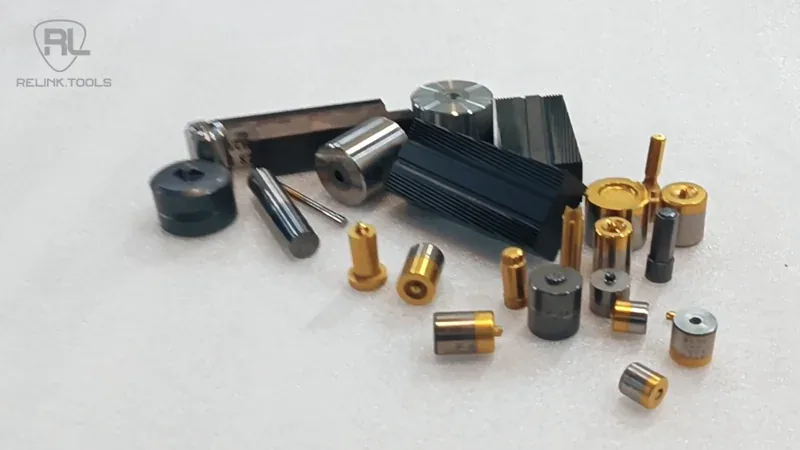
Request a Quote
Get In Touch QuicklySend us your machine model or drawing, the wire or material, and the quantity. We will prepare a quotation.