

Why Cold-Rolled Ribbed Steel Bars Are Superior?
In this article
Introduction
When it comes to reinforcing concrete, the type of steel used can dramatically impact a project’s cost, durability, and overall performance. While various options exist, cold-rolled ribbed steel bars — rolled with tungsten carbide roller rings — have emerged as a preferred material for many applications. But what makes them stand out, and what does the process of creating them entail?
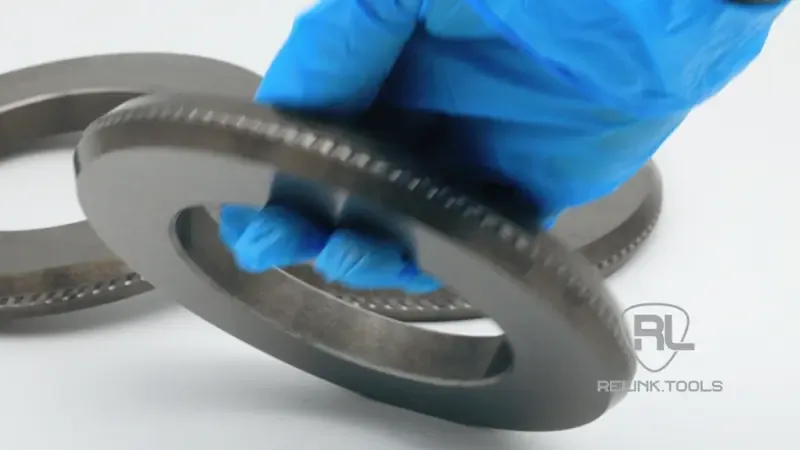
Cold rolling is a metal forming process that occurs at room temperature. In this method, steel is passed through rollers under pressure to change its shape and enhance its properties. Production starts with hot-rolled wire rod. After the surface scale is removed — mechanically or by pickling — the rod is cold-rolled through carbide roller rings, which reduce its diameter and form the ribs. These ribbed bars typically have a strength grade of around 550 MPa and are produced in small diameters, typically 3–16 mm. They are widely used in cast-in-situ concrete structures, serving as load-bearing and distribution reinforcement in floor slabs and foundations, distribution bars in shear walls, and stirrups in beams and columns.
The Advantages of Cold-Rolled Ribbed Steel Bars
Opting for this type of reinforcement offers several distinct benefits that appeal to engineers and builders alike.
High Strength and Cost-Effectiveness: The primary advantage is their high strength, which allows for significant savings in construction steel and reduces overall project costs. Compared with conventional hot-rolled plain round bars, Grade 550 cold-rolled ribbed bar is commonly reported to save around a third of the steel required. When you factor in the potential to eliminate hooks at the end of the bars, the savings can be even greater. For every ton of cold-rolled ribbed steel used, the material cost savings can be substantial.
Superior Bond with Concrete: The ribbed profile creates an excellent bond and anchorage with the surrounding concrete. This mechanical interlock fundamentally prevents the cracking and steel slippage that can lead to structural failure in the anchorage zones of a component. It enhances the load-bearing and crack-resisting capacity at the ends of structural members. In reinforced concrete, the resulting crack widths are also smaller than those seen with plain round bars and even hot-rolled deformed bars.
Improved Ductility: These bars exhibit a higher elongation rate compared to other types of cold-worked steel, providing better ductility and performance under stress.
How Cold-Rolled Ribbed Bar Is Made
The rod runs through cold rolling cassettes. Each cassette holds two sets of tungsten carbide roller rings, three rings to a set, spaced around the bar.
Most lines today use two cassettes:
- First cassette — reduction. An oval-reducing set (RO) followed by a round-reducing set (RT) brings the rod down in diameter. This stage is the same whether the line makes plain or ribbed bar.
- Second cassette — finishing. For ribbed bar, a forming set (FO) prepares the section and a profiling set (PR) rolls the ribs. For plain bar, a further reducing set (RO) is followed by a sizing set (CA).
Running two cassettes instead of more cuts equipment and operating cost, but it puts more load on every ring. Rings wear faster and need replacing sooner. That makes carbide grade and ring geometry more important than ever, because the right choice is what keeps a two-cassette line running between changes.
Two-sided or three-sided ribs
Two-sided ribs are rolled with paired rings, two to a set. Three-sided ribs need a three-ring set, and the ring dimensions and angles differ from the two-ring type. In China, the revised national standard GB 13788-2024 (in force since September 2024) requires three-sided ribs on CRB550 bar.
Getting the ring set right
The ring set is chosen from two numbers: the rod diameter going in and the bar diameter coming out. Send both, and Relink will match the full four-set sequence for your line. For bars above 14 mm, 25 mm-thick rings are used.
Plain wire can also be made on the same line instead of being drawn. For large tonnages of one size, plain roll rings are usually the cheaper route; for smaller lots — as a rough guide, below about 500 t per month of a single diameter — multi-pass drawing through carbide, PCD or nano dies is more economical. Relink supplies both. See carbide roll rings and cold rolling cassettes.
Advanced Processing and Application Performance
The cold-rolling process induces work hardening in the steel. To counteract this, production lines often include an online annealing unit. Using induction heating, the bars are heated to 600-700°C and then air-cooled. This relieves internal stresses while preserving the steel’s high strength. For higher-grade products (CRB800 and above), an additional aging treatment is required, where the finished bars are stored in a constant-temperature chamber for over 8 hours to allow the crystal lattice structure to fully stabilize.
In practical application, the bending performance of cold-rolled ribbed steel is a standout feature. Test data shows that a 6 mm diameter CRB550 steel bar has a minimum bending radius of just 3d (where ‘d’ is the bar diameter), far superior to the 8d standard for traditional cold-drawn low-carbon steel wire. This flexibility provides a significant advantage in constructing complex joints, such as the spiral stirrups in the concealed columns of shear walls, where it reduces on-site processing waste.
As industrialized construction evolves, cold-rolled ribbed steel is being deeply integrated with precast components. Project experience with CRB550 truss floor decks shows narrower post-pour cracks than with conventional HRB400 rebar. This synergy is driving the development of even higher-strength cold-rolled products.
Conclusion
Cold-rolled ribbed steel bars are a superior choice in modern construction due to their high strength, cost-effectiveness, excellent concrete bonding, and enhanced ductility. Their advanced manufacturing process ensures precision and quality, making them ideal for both cast-in-situ and precast applications. With ongoing innovation, these bars are poised to further revolutionize construction, offering unmatched durability and efficiency.
Did this answer your question?