

Two-Pass Roll Set-Up — Smooth Wire vs Ribbed Wire
In this article
- Short answer
- The two routes, side by side
- How the model numbers read
- Four worked lines
- One rod size, more than one finished size
- What a configuration table does not settle
- What to send with an enquiry
- FAQ
- Do smooth-wire and ribbed-wire lines share any rolls?
- What does the number after CA or PR mean?
- Can one machine be set up for both smooth and ribbed wire?
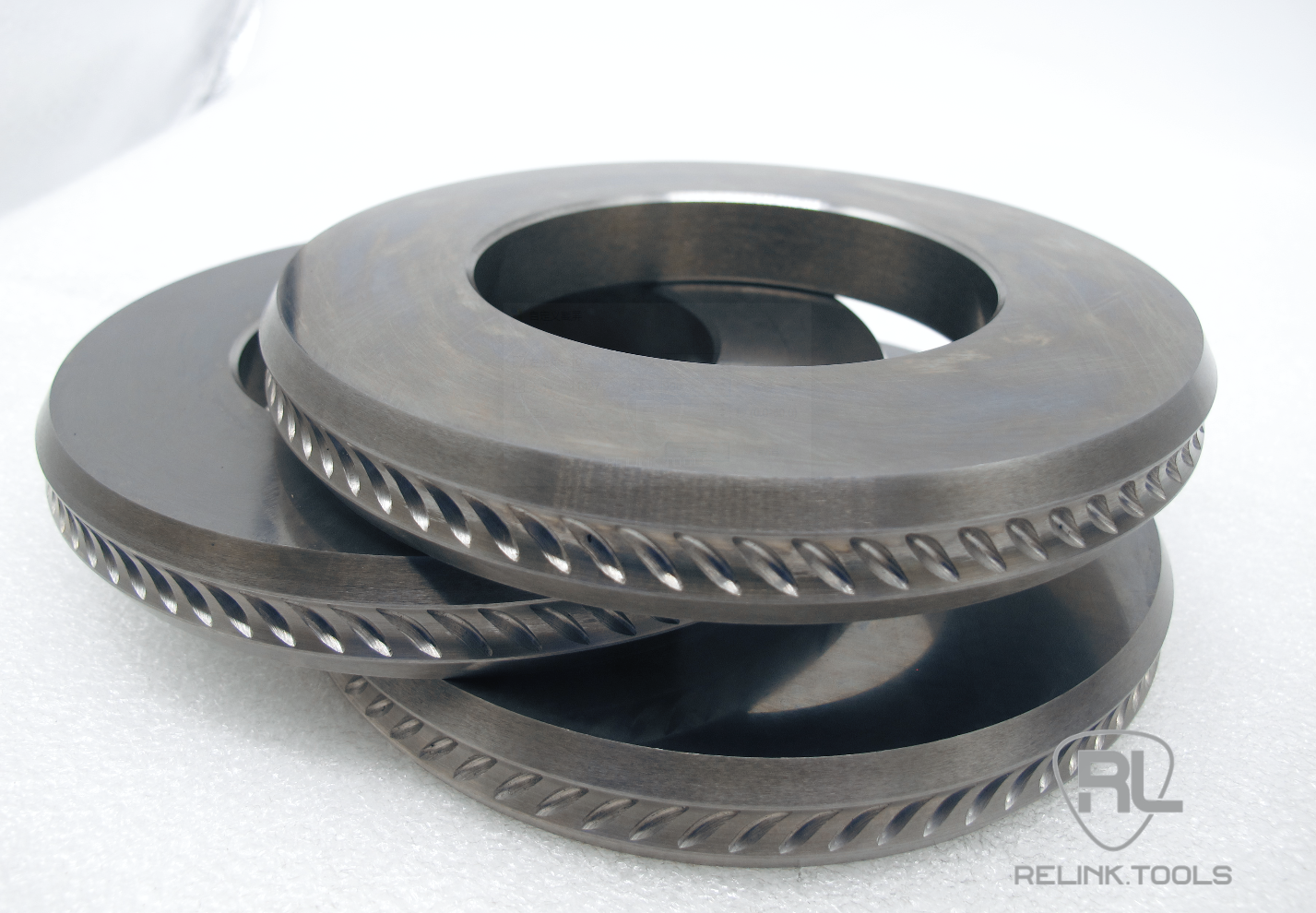
Short answer
On a two-pass cold rolling line the first pass is the same whether you are rolling smooth wire or ribbed wire: an oval reducing roll (RO) followed by a round reducing roll (RT). The two routes split only in the second pass — smooth wire runs an oval reducing roll (RO) and then a sizing roll (CA), while ribbed wire runs a forming roll (FO) and then a profiling roll (PR). That is why a roll-ring enquiry starts with two numbers, not with a grade: the rod diameter going in, and the finished diameter coming out.
The two routes, side by side
| Stand | Smooth wire | Ribbed (reinforcing) wire |
|---|---|---|
| Pass 1 · first | RO — oval reducing | RO — oval reducing |
| Pass 1 · second | RT — round reducing | RT — round reducing |
| Pass 2 · first | RO — oval reducing | FO — forming |
| Pass 2 · final | CA — sizing | PR — profiling |
The first pass is interchangeable between the two routes. Everything that makes the wire smooth or ribbed happens in the second pass.
How the model numbers read
- RO, RT and FO carry a step number that rises with the rod diameter. In the sequence used here, RO 0 and RT 0 sit at the small end and RO 7 and RT 7 at the large end, covering rod from 4.0 mm to 15.0 mm. Larger sizes on request.
- CA and PR carry the finished diameter itself. CA 8.0 sizes to 8.0 mm; PR 8.0 profiles to 8.0 mm.
So a set is described end to end by a single line: rod in, the four rolls, wire out.
Four worked lines
Smooth wire:
| Rod | Pass 1 | Pass 2 | Finished |
|---|---|---|---|
| 5.5 | RO 1 + RT 1 | RO 0 + CA 4.0 | 4.0 |
| 10.0 | RO 5 + RT 5 | RO 4 + CA 8.0 | 8.0 |
Ribbed wire:
| Rod | Pass 1 | Pass 2 | Finished |
|---|---|---|---|
| 10.0 | RO 5 + RT 5 | FO 3 + PR 8.0 | 8.0 |
| 12.0 | RO 6 + RT 6 | FO 4 + PR 10.0 | 10.0 |
Read the 10.0 rod lines together and the pattern is clear: the same RO 5 + RT 5 first pass serves both routes, and only the second pass decides what comes off the line.
One rod size, more than one finished size
A mill is rarely tied to a single output. From 11.0 mm rod, the smooth-wire route reaches 8.5 mm with RO 4 + CA 8.5, and 9.0 mm with RO 5 + CA 9.0 — the first pass (RO 5 + RT 5) does not change. From 12.0 mm rod, 9.5 mm and 10.0 mm differ only in the sizing roll.
The practical consequence: if your line is quoted for two or three finished sizes, you are buying more than one set, and the sets overlap. Sorting out which rings are shared and which are size-specific before you order is usually where the money is saved.
What a configuration table does not settle
A sequence table tells you which roll type goes in which stand. It does not tell you:
- the groove geometry of each step — set by the mill and the cassette, not by the sequence;
- the reduction taken in each pass;
- the ring outside diameter, bore and width — these follow the cassette or stand you have;
- the carbide grade — chosen from what the line does to the ring, not from the sequence.
For each of these the answer is "per machine". What decides it: the mill make and model, the cassette type, and the rings you are running today.
What to send with an enquiry
- rod diameter in, and every finished diameter you need out;
- smooth, ribbed, or both on the same machine;
- mill make and model, or the cassette type;
- outside diameter, bore and width of the rings you run now, if this is a replacement;
- the rebar standard you roll to, if the wire is ribbed.
With those five lines a set can be matched against the sequence above. Relink can supply the RO, RT, FO, CA and PR rings as a matched set, and we can supply the cold rolling cassettes they sit in. Grades and sizes are confirmed per enquiry — see carbide roll rings for the range, and steel mesh production for how the rolling stage fits the rest of the line.
FAQ
Do smooth-wire and ribbed-wire lines share any rolls?
Yes — the first pass is identical. Both routes start with an oval reducing roll (RO) followed by a round reducing roll (RT), at the same step number for a given rod diameter. The routes separate in the second pass: sizing (CA) for smooth wire, forming plus profiling (FO + PR) for ribbed wire.
What does the number after CA or PR mean?
The finished diameter in millimetres. CA 8.0 is a sizing roll for 8.0 mm smooth wire; PR 8.0 is a profiling roll for 8.0 mm ribbed wire. The step numbers on RO, RT and FO work differently — they are range steps, not diameters.
Can one machine be set up for both smooth and ribbed wire?
The first pass carries over, so in practice you change the second pass. Whether that is a roll change or a cassette change depends on the mill and the cassette type, so send the make and model with your enquiry and it can be checked against your stand.
Ready to match a set? Send your rod and finished diameters and we will come back with the sequence and the rings for it.
Did this answer your question?