

What Does It Take to Craft the Perfect Wire Drawing Die?
In this article
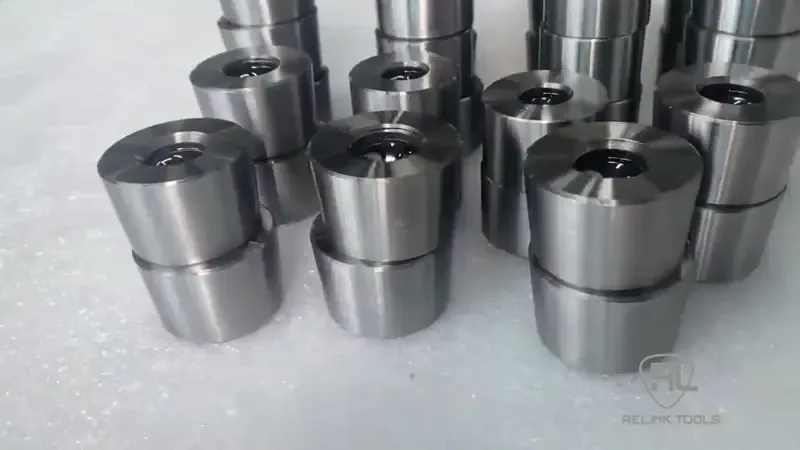
What Goes Into a Good Wire Drawing Die
This article walks through what separates a good wire drawing die from an ordinary one — and what to check when you source them.
What may sound like a simple industrial tool is, in reality, a masterpiece of precision engineering. The journey of a wire drawing die, from a block of raw material to a finished product, is a testament to the art and science of modern manufacturing, where every step is governed by a commitment to precision down to the smallest micron.
The Foundation of Quality: Material Selection
The first and most critical step in creating a superior wire drawing die is the selection of materials. The quality of the finished wire is directly impacted by the material of the die. The casing should be high-grade steel, properly fitted to hold the nib under drawing load.
A Spectrum of Precision: Exploring Die Types
However, the heart of the die—the internal nib that comes into contact with the wire—is where true specialization comes into play. The choice of nib material depends entirely on the application, balancing factors like the type of wire being drawn, production speed, and desired finish. Here’s a look at the industry’s leading choices:
-
Tungsten Carbide (T.C.) Dies: Known for their exceptional toughness and cost-effectiveness, T.C. dies are a versatile workhorse in the industry. They are highly resistant to impact and are ideal for drawing a wide range of ferrous and non-ferrous wires, especially in applications where extreme hardness is not the primary requirement.
-
Polycrystalline Diamond (PCD) Dies: When it comes to hardness and wear resistance, PCD dies are in a class of their own. Composed of synthetic diamond particles sintered together, these dies offer a significantly longer lifespan than their T.C. counterparts, especially when drawing abrasive materials. The result is remarkable wire surface smoothness and dimensional accuracy over long production runs.
-
The Cutting-Edge: Nano Dies: Pushing the boundaries of performance, nano dies represent the latest innovation in wire drawing technology. These are typically dies with a nano-diamond coating or are constructed from nano-polycrystalline diamond particles. This advanced structure provides an even lower coefficient of friction and superior wear resistance, leading to an impeccable wire finish and extended die life, perfect for ultra-fine wire and high-performance applications.
A Symphony of Precision: The Manufacturing Process
With the materials selected, the meticulous process of shaping the die begins. Each die is a product of sophisticated machining, where every angle and curve of the internal geometry is engineered for optimal wire drawing performance. This is not just about creating a hole; it’s about designing a smooth, tapered channel that allows the wire to be reduced in diameter with minimal stress and maximum efficiency. The details here truly define the success of the final product.
The journey continues to the grinding and polishing stages. This is where a mirror-like, burr-free finish is achieved. A flawless surface is paramount, as it significantly reduces friction and prevents any damage to the wire as it passes through the die. This is where craftsmanship and technology converge to create a surface that is both beautiful and highly functional.
The Hallmark of Excellence: Rigorous Quality Control
Every die should be inspected before shipment: bore diameter, roundness, and the angles of the internal profile, checked with measuring and imaging equipment. When you source dies, ask for these inspection results with each order — Relink supplies a full dimensional inspection report with every shipment.
Choosing the Right Die
The right nib material, geometry and finish depend on your wire, speed and pass schedule. Tell us your line and we will recommend the die for each pass — that is the art and science behind the tools that shape the wires that connect our world.
Did this answer your question?