

Which Tungsten Carbide Grade Is Best for Cold Forming Dies?
In this article
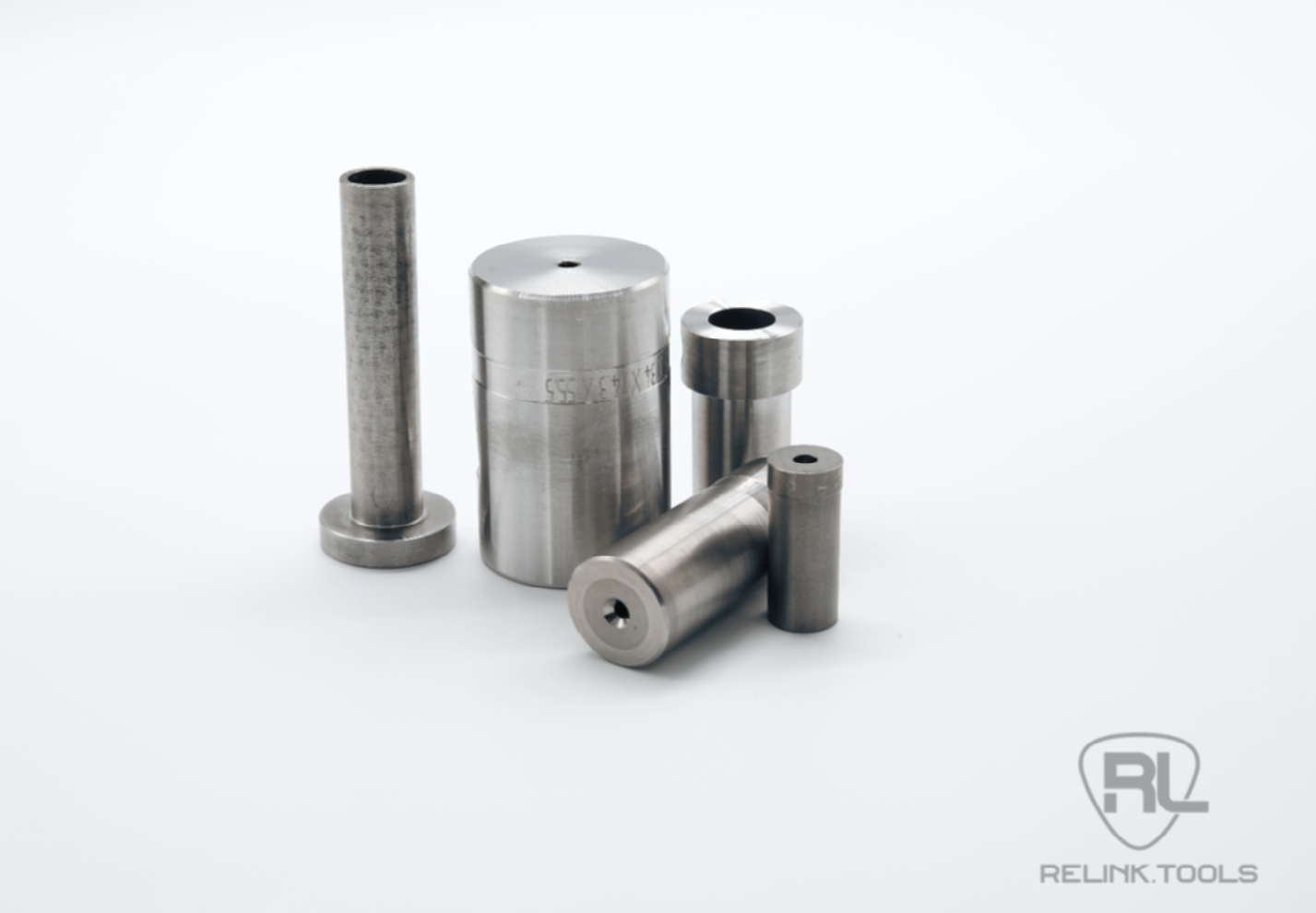
Short answer: there is no single best grade. For cold forming dies, carbide is chosen for toughness first, then wear. Most cold heading carbide sits at about 15–25 % cobalt. Use the higher end, around 20–25 % with a coarser grain, where impact dominates — upsetting, large heads, hard wire. Use the lower end, around 15–18 % with a finer grain, where wear dominates — extrusion, reducing and stainless steel wire. For standard carbon-steel screws and bolts, a mid-range grade with about 20 % cobalt is the usual choice.
The rest of this article explains why, and what to tell your supplier so the grade fits the part.
Why cold forming needs a different grade from wire drawing
A wire drawing die sees steady pressure and steady wear. A cold heading die takes a hard blow on every stroke, many times a minute. The main way cold heading tooling fails is breakage — punches snap and dies crack, mostly from repeated impact — not slow wear. So the grade that works best in a drawing die is often too brittle for a heading die.
What "grade" means in carbide. Tungsten carbide tooling is hard tungsten carbide grains held together by a cobalt binder. The cobalt content and the grain size set the balance. More cobalt and coarser grains make the carbide tougher and better at taking impact, but softer and quicker to wear. Less cobalt and finer grains make it harder and longer-wearing, but more likely to crack under a heavy blow.
The ranges used for cold heading
The grades we supply for cold heading sit in these ranges. Which end of the range suits you depends on the part.
| Property | Range supplied |
|---|---|
| Cobalt (binder) content | About 15–25 % |
| Tungsten carbide content | About 75–85 % |
| Grain size | About 2–9 µm |
| Density | About 13.1–14.0 g/cm³ |
| Hardness | About 81–86 HRA |
| Transverse rupture strength | About 2,000–2,900 MPa |
Match the grade to the work the die does
The work the die does sets the direction. Where wear dominates — extrusion and reducing — a lower-cobalt grade holds its size longer. Where impact dominates — upsetting and heavy heading blows — a higher-cobalt grade resists cracking.
Our recommendation:
- Heavy impact — large heads, long upsets, hard wire: higher cobalt (around 20–25 %) with a coarser grain. Tougher, less likely to crack.
- Wear-critical dies and stainless steel wire: lower cobalt (around 15–18 %) with a finer grain. Harder, longer wear life where impact is moderate.
- Standard carbon-steel screws and bolts: a mid-range grade with about 20 % cobalt is the usual choice.
On a multi-station header, the stations do not all do the same work, so the dies on one machine do not all need the same grade. A reducing die can sit at the harder end while the heading die next to it sits at the tougher end.
The steel case matters as much as the grade
Carbide is very strong in compression but weak in tension. That is why a carbide heading die is a carbide insert pressed or shrink-fitted into a steel case: the case puts the insert under compression before the first blow, so the forming load does not pull it apart.
The interference has to be right. Too little and the insert cracks under load; too much and it is overstressed before it starts. Before blaming the grade for a cracked new die, check the fit. If you move to a higher-strength wire, the fit may need to be recalculated — tell us before you change material.
Punches and trimming dies: carbide or tool steel
Not every part of the tool set is carbide. Punches and trimming dies are carbide or tool steel, depending on the part and the run length. Carbide pays off on long runs and on harder or more abrasive wire such as alloy and stainless steel. Tool steel still makes sense for short runs, frequent changeovers and soft materials.
When a drawing calls for high-speed steel, it often names the same steel in different standards — for example SKH9 in the Japanese standard, or 1.3343 in the German one. Trimming dies can be supplied with a TiN coating.
What to send so the grade fits the part
The grade is matched to your part, wire and machine, and confirmed on the quotation. To quote, we need:
- a drawing or photo of the tool, or a worn die and the part it makes;
- the wire material and grade, and any planned change of material;
- the machine model;
- the quantity.
Every order ships with a full dimensional inspection report.
See the carbide inserts, punches and trimming dies we supply on the cold header tooling page, or send your drawing through the technical quote page.
Did this answer your question?